

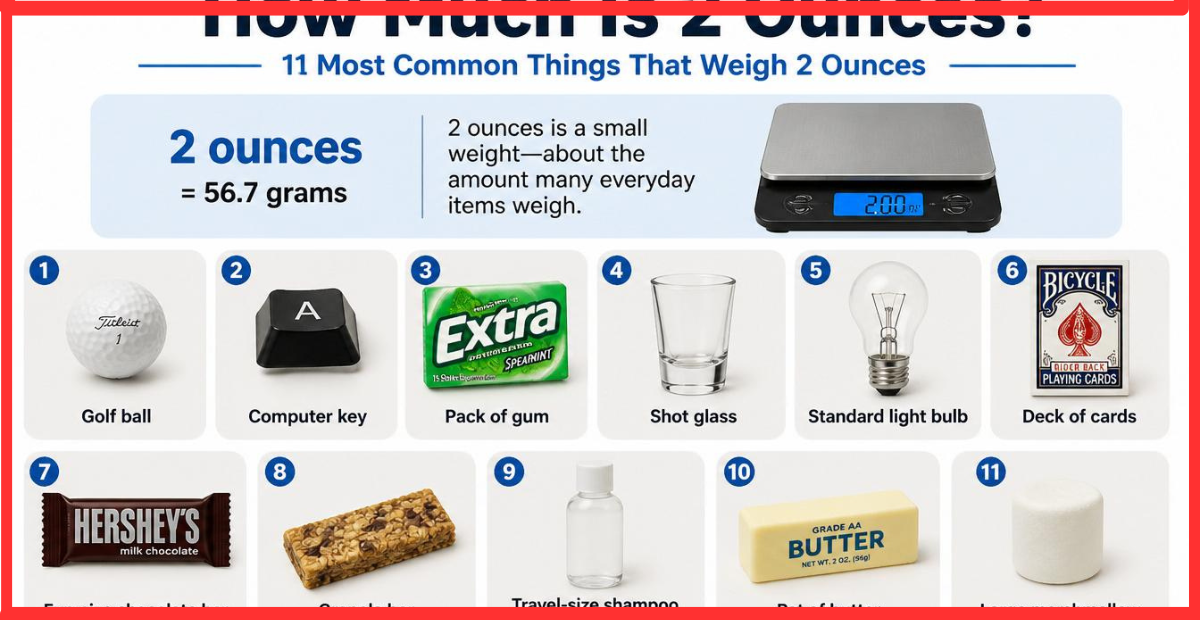
There are moments in life when tiny numbers start behaving like they got a personality of their own. Two ounces is one of those sneaky little measures.
You hear it and think “ah ok, that’s nothing much,” but then you actually hold something close to that ounce (oz) range and your brain kinda pauses for a second like it didn’t expect reality to feel so specific.
I still remember once trying to estimate a package without a scale, just guessing by hand, and I was off by a lot.
That’s where weight measurement becomes more than theory, it becomes this quiet little skill you don’t realize you’re building.
Whether you’re using the imperial system or switching between metric system units like gram (g) or kilogram (kg), the brain has to learn a new language of heaviness. And it doesn’t always cooperate quickly, honestly.
Two ounces looks small on paper, but in real life it sits in that strange middle space where it’s light… but not invisible-light. You can feel it. You can misjudge it. And that’s what makes it kinda interesting.
| Item | Approx. Weight |
|---|---|
| Bar of soap | ~2 oz |
| Deck of playing cards | ~2 oz |
| Wireless earbuds with case | ~2 oz |
| Dry kitchen sponge | ~2 oz |
| 2 AA batteries | ~2 oz |
| Travel-size shampoo bottle | ~2 oz |
| 10 U.S. pennies | ~2 oz |
| Light bulb | ~2 oz |
| Small empty sandwich bag | ~2 oz |
| Shredded cheese (¼ cup) | ~2 oz |
| Small meat portion | ~2 oz |
Understanding How Much Is 2 Ounces in Real Life
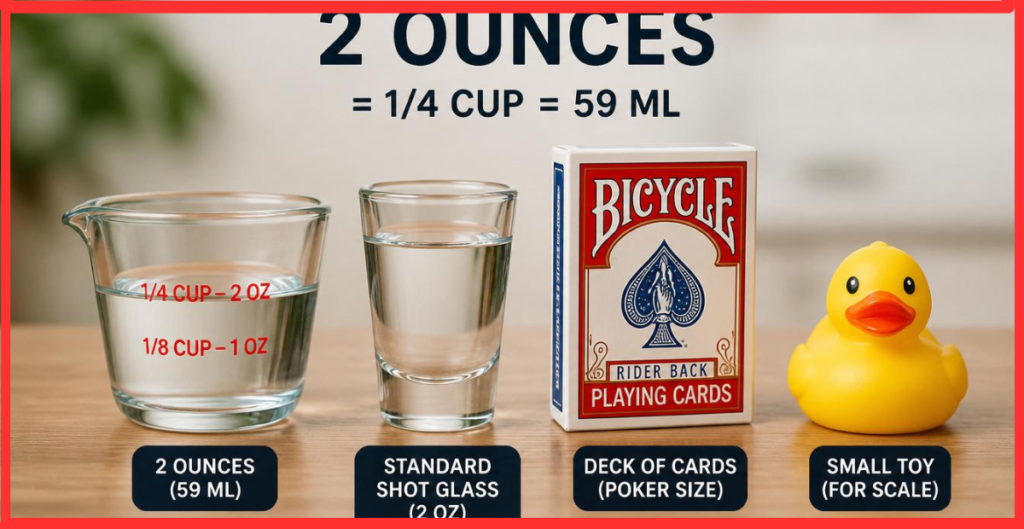
When we say 2 ounces, we’re talking about a unit conversion moment that connects kitchen counters, shipping boxes, gym plates, and even science labs in a weirdly unified way.
In simple terms:
- 2 ounces (oz) ≈ 56.7 grams (g)
- Or 0.0567 kilograms (kg)
- Or about 59 milliliters (ml) if we’re talking water-like liquids
That’s not just numbers, that’s actual physical presence in your hand. This is where the weight measurement system becomes useful in everyday thinking. Because without it, we’d just be guessing all day long like confused bakers in a hurry.
In cooking & baking, this kind of precision matters more than people admit. A little too much flour or sugar and suddenly your “soft cookies” turn into little bricks of disappointment. That’s why chefs quietly rely on kitchen scale usage instead of eyeballing everything.
And yeah, sometimes people think 2 ounces is nothing, but in nutrition science even small portion size differences matter, especially when tracking calorie portion estimation or nutrition portion control.
Why 2 Ounces Feels Different Than It Sounds
There’s a funny thing about human perception of weight, like our brains don’t always respect math. That’s where weight perception and sensory learning come in.
You hear “2 ounces” and imagine feathers, but hold 2 ounces of dense metal and suddenly it feels heavier.
This mismatch is part of tactile learning (physical intuition of weight) and everyday cognition. We build a kind of internal database of objects without realizing it, a mental reference library that says “oh yeah this feels like soap, this feels like batteries.”
It’s also why people struggle with unit conversion between imperial system and metric system at first. Numbers don’t automatically translate into feeling.
And honestly, it takes time. A bit of repetition. A bit of dropping things accidentally (oops). That’s how comparison-based learning slowly builds real weight intuition building.
How Much Is 2 Ounces in Grams, Milliliters, and Everyday Thinking
So let’s ground it properly. Two ounces equals about 56.7 grams, which in the metric system is small but not microscopic.
In cooking terms:
- Roughly a small meat portion
- A modest handful of shredded cheese
- A thin slice or wedge of avocado
- About half a cup of airy ingredients like salad greens
This is where cooking measurement accuracy becomes important. Recipes assume you understand what 2 ounces “feels like,” but if you don’t, a measuring cup or kitchen scale becomes your translator.
In shipping & logistics, 2 ounces can decide whether your parcel slips into a cheaper category or crosses a threshold. That’s how strict packaging measurement rules can get. Even airlines, with their airline liquid restrictions ounces, treat small volumes like serious business.
And in laboratory measurement, 2 ounces would still be considered a small sample but not irrelevant, especially in scientific measurement precision contexts.
11 Common Things That Weigh Around 2 Ounces
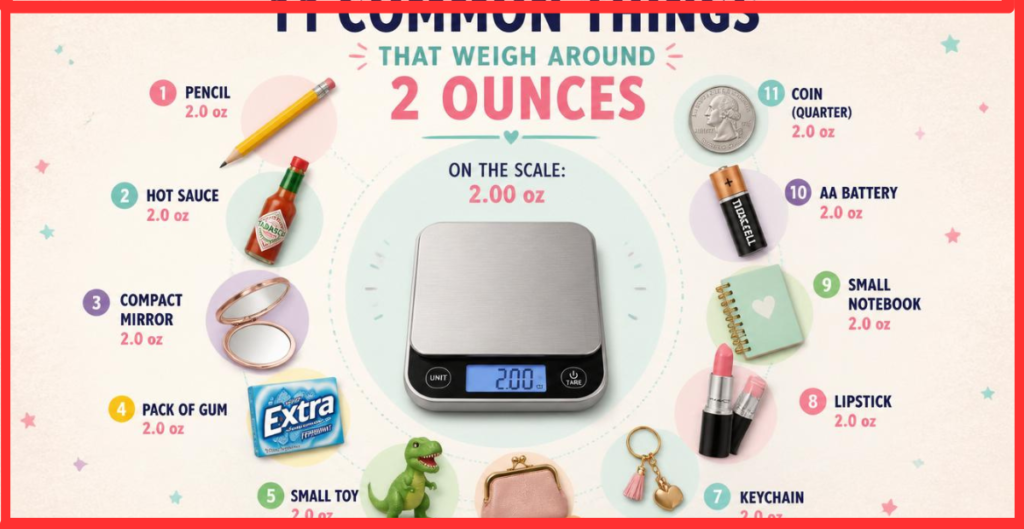
Here’s where it gets fun. Real-world objects make abstract weight suddenly feel human again.
- A small travel-size bar of soap (some compact ones hover around 2 oz, especially hotel soaps). You hold it and it feels like cleanliness has a weight, oddly poetic huh.
- A couple of AA batteries together. One AA battery is light, but two or three bring you close to that 2-ounce range. Perfect example of electronics & power sources in everyday life.
- A mini kitchen sponge (dry). Not the soaked one, the dry one. Wet it and you’ve already broken the illusion of 2 ounces.
- A compact sandwich bag (empty) filled with air, barely anything in it but still measurable.
- A small handful of shredded cheese, like a light sprinkle for tacos. This is classic food serving size estimation.
- A wedge of avocado (not the whole fruit, just a slice). Avocado is dense in a sneaky way, rich in nutrients and fiber.
- A few U.S. pennies grouped together. Metal coins always mess with your brain because they feel heavier than expected.
- A lightweight light bulb, especially compact LED types. Fragile but surprisingly balanced in weight.
- A travel mini shampoo bottle, especially half-filled ones. These are designed around airline rules so they often sit right in this range.
- A small wireless earbuds with case (some ultra-compact versions come close when averaged).
- A soft portion of meat portion like thin sliced deli meat or small cooked serving used in dieting plans.
Each of these helps build a kind of real-world analogy learning system in your brain, where you don’t just know 2 ounces, you feel it.
2 Ounces in Cooking, Nutrition, and Kitchen Measurement
In the kitchen, 2 ounces is more important than it looks. Cooking is full of silent math. You’re constantly doing ingredient measurement without thinking about it.
A recipe might say:
- 2 oz sauce
- 2 oz sugar
- 2 oz salad dressing
And suddenly precision becomes the difference between “wow this is good” and “uh… something is off.”This is where baking precision matters a lot. Baking doesn’t forgive guessing. It demands respect for measurement accuracy.
Even in nutrition science, 2 ounces of food can carry different nutrient density foods values. A small portion of kiwi or lemon (Citrus limon) might be low calorie but rich in vitamins (A, B12, C, D, E) and antioxidants.
That’s why diet tracking apps rely heavily on food portion measurement instead of vague estimates. Because human memory alone is kinda unreliable when hunger is involved, no joke.
Real World Analogy Learning: Building Weight Intuition
We don’t learn weight from textbooks alone. We learn it from life. From holding things, dropping things, guessing wrong, and slowly improving.
This is intuitive measurement understanding, where your brain builds a mental mapping of units over time.
For example:
- Soap becomes your “2 oz reference”
- A bottle cap becomes “too light”
- A small dumbbell becomes “too heavy, obviously”
That’s everyday cognition at work. No effort, just repetition and sensory feedback.Even biology sneaks into it. A tiny bird like the Eastern Bluebird (Sialia sialis) weighs only a bit more than a few ounces.
Nature itself becomes a reference system, a living biological weight reference.And in labs, scientists depend on this same principle, just more precise, more controlled, more sterile.
Travel, Shipping, and Practical Life Uses of 2 Ounces
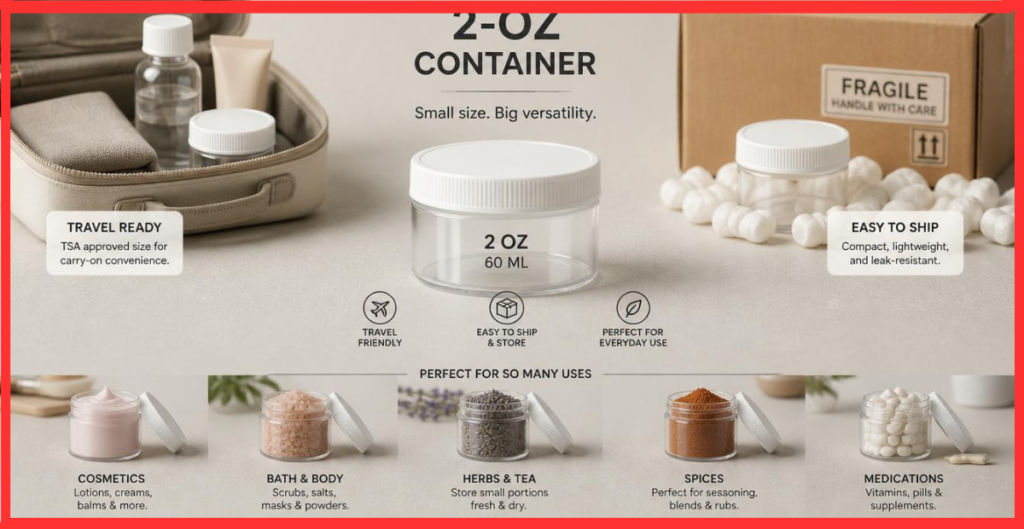
Outside the kitchen, 2 ounces quietly controls more than people realize.In shipping weight calculation, small differences can change pricing tiers. A package at 2 oz might be cheaper than one at 2.1 oz. That tiny jump matters in bulk mailing.
For travelers, travel size toiletries weight is everything. Airlines are strict, and knowing what 2 ounces looks like helps avoid repacking at the airport floor in mild panic.
Even in medication dosage, precision is life-critical. While meds are usually measured in mg, the idea of controlled small measurement carries over directly from the same system logic.
In fitness, people sometimes track small increments of supplements or powders using kitchen scale usage, ensuring consistency in fitness & gym measurement routines.It all connects back to the same idea: small weight, big importance.
Frequently Asked Question
ya mari h3 hading ha ap in ko change na kara bas each hading ka 1 sa 2 line ka answer likh do english ma
Frequently Asked Question
what weighs 2 oz
A common 2 oz weight is similar to a standard bar of soap or a deck of playing cards. These small everyday items help you easily visualize this light weight.
what weighs 2 ounces
Items like wireless earbuds with their case, two AA batteries, or a small kitchen sponge typically weigh about 2 ounces. They are light enough to hold in one hand without effort.
what weighs two ounces
About two ounces is the weight of roughly 10 U.S. pennies or a travel-size shampoo bottle. These are simple real-world objects often used for weight comparison.
how much is 2 ounce
2 ounces equals approximately 56.7 grams, 0.125 pounds, or about 1/4 cup in volume. It is a small, lightweight measurement commonly used in cooking and daily life.
things that weigh 2 ounces
Things that weigh around 2 ounces include a light bulb, a small sandwich bag, shredded cheese (¼ cup), or a small meat portion. These everyday items help make the weight easy to understand.
Read this Blog: https://yordzenral.com/pringles-can-dimensions/
Final Thoughts: When Small Numbers Teach Big Understanding
Two ounces might look like a simple number on paper, but in reality it sits inside a whole ecosystem of meaning.
From weight conversion chart logic to real-life kitchen habits, from shipping counters to nutrition labels, it quietly appears everywhere.
And maybe that’s the interesting part. Not the number itself, but how it teaches us comparison-based learning without asking for attention.
Once you start noticing it, you realize your world is full of invisible measurements you already understand without trying. A bit of soap here, a handful of cheese there, a bottle of shampoo in your bag.
If you ever want to really understand weight, don’t just memorize grams or ounces. Hold things. Compare them. Mess up sometimes. That’s how practical knowledge retention actually sticks.
And if you’ve got your own weird objects that feel like 2 ounces but aren’t listed here, it would be honestly fun to hear them. People always have their own personal “weight references,” even if they don’t realize it yet.
In the end, small measurements like 2 ounces remind us that everyday life is built from tiny, almost invisible details… and once you start noticing them, they don’t really stop showing up.