

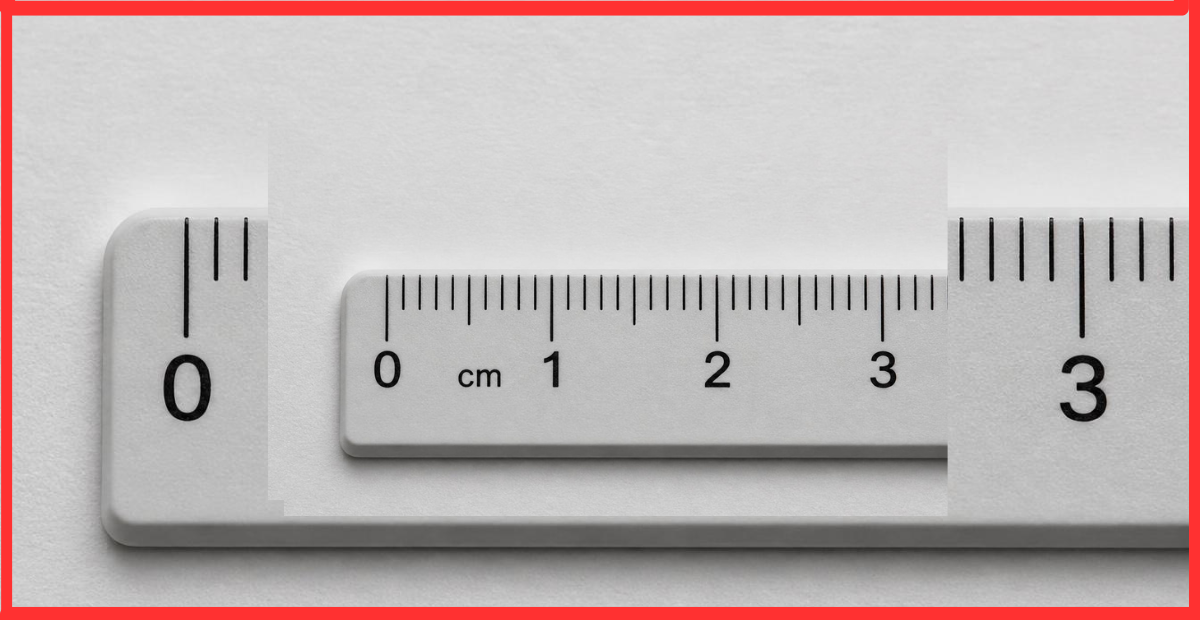
There are days when you hold something so tiny between your fingers and your brain kinda refuses to believe it has “real size”.
Like, 2 centimeters long sounds almost like nothing until you actually see it sitting on your palm, blinking back at you in silence.
It’s the same strange emotional contradiction people feel when a baby girl is born so small, so quiet, yet somehow already carrying an entire universe of meaning inside her breath.
I still remember an elder in my family saying, in a slightly cracked voice, “A daughter arrives like a whisper, but she changes the whole room without asking permission.”
Maybe that’s why writing about baby girl wishes and tiny objects together doesn’t feel random at all. It feels like they belong in the same emotional drawer, somewhere between memory and miracle.
Across cultures from the storytelling Indus Valley Civilization traditions passed down by unnamed “grandmothers”, to symbolic newborn rituals in parts of Europe and the Americas smallness has always been treated with weird respect.
Even in the Mayan Civilization, tiny carved artifacts were believed to carry protective meaning. Small things were never “less”; they were concentrated meaning.
So today, we’re looking at everyday things that are roughly 2 centimeters long, but also somehow bigger than their size if you really think about them.
And yes, somewhere in between we’ll keep weaving in poetic baby wishes, history, and those strange emotional overlaps where measurement becomes memory.
| Situation | Perceived Meaning | Reality | Why It Feels Exaggerated |
|---|---|---|---|
| Small physical difference (e.g., 2 cm change in size or length) | “That’s a noticeable change” | Often within normal measurement variation | Human eyes are sensitive to proportional differences, not just absolute numbers |
| Comparing two objects side by side | One looks “much bigger” | Actual difference is minimal | Direct comparison amplifies small gaps |
| Body or appearance measurements | “It’s a significant difference” | Usually medically or practically insignificant | Emotional focus increases attention to small details |
| Performance or progress tracking | “I’ve barely improved” | Real improvement exists but is small per unit | Progress feels slow when measured in tiny increments |
| Visual estimation without tools | “That’s definitely bigger/smaller” | Estimation error can be large | The brain relies on context, not exact measurement |
15 Everyday Things That Are 2 Centimeters Long in Daily Life
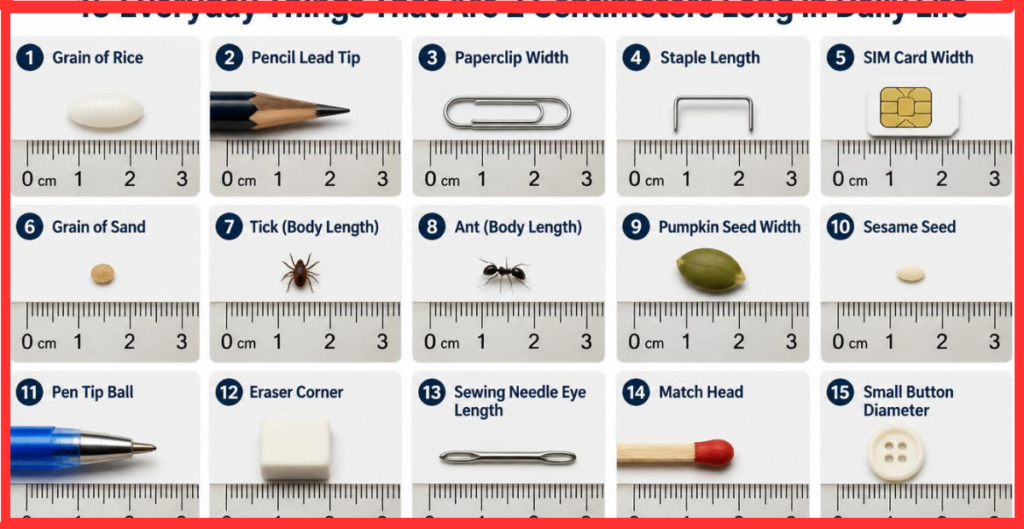
If you ever try to visualize how big is 2 cm, your mind probably jumps between confusion and surprise. It’s not quite a fingernail, not quite a coin edge, but somewhere in that liminal space where design, nature, and human invention quietly meet.
Here are everyday objects that often hover around that tiny scale, each one a reminder that small doesn’t mean insignificant.
- A standard paperclip size segment, especially the bent tip portion, often sits close to 2 centimeters long, something once indirectly tied to early fastening innovations inspired by Samuel B. Fay (paperclip patent, 1867), who probably never imagined people would romanticize it like this
- The metal head of a safety match developed in the lineage of Gustaf Erik Pasch (safety match inventor, 1844), a tiny ignition point that changed survival habits across 19th century households in Europe
- A small shirt button size, especially vintage coat buttons, often circles around that small scale measurement zone
- The rubber tip of a pencil eraser, loosely connected to the legacy of Joseph Priestley (rubber/eraser discovery, 1770), which makes even mistakes feel physically “undoable” in a very literal way
- The width of a compact pen cap width, echoing the legacy of László Bíró (ballpoint pen development, 1938) who kinda reshaped how humans write forever
- A tiny staple size after being partially opened, like a bent memory of office work
- The small plastic rim of a paper hole reinforcer size, often overlooked but weirdly satisfying to touch
- A micro segment of a sewing needle eye, where thread passes like destiny through a narrow gate
- The edge thickness of a guitar pick dimensions, especially worn-out ones used by musicians who don’t really care about precision anymore
- A short slice of a broken craft beads size chain, scattered like tiny planets on a table
These objects don’t shout for attention. They just exist quietly, like the early tools that shaped civilization itself from the Upper Paleolithic period when humans first started shaping bone
and stone into tools, to modern offices powered by IBM systems and digital workflows, where even USB ports are descendants of centuries of miniaturization thinking.
And weirdly enough, when people write baby girl wishes, they often describe her in similarly tiny-but-infinite terms “tiny fingers, endless future”, or “small hands, huge dreams”. Scale becomes emotional language.
Everyday Things That Are 2 Centimeters Long and How We Overlook Them
Now here’s where things get slightly more interesting. Because LSI keywords like tiny everyday objects, object size comparison, and millimeter scale objects are not just technical phrases they’re basically how human curiosity tries to map invisible size into visible meaning.
- A small segment of a USB flash drive / USB stick (form factor context) connector edge, inspired by innovations linked to M-Systems (USB flash storage innovation context, 1998) and later adopted widely across tech ecosystems, including IBM storage architecture discussions
- A clipped portion of a matchstick head size, again looping back to chemical ignition history and human survival
- The narrow end of a seashell small size fragment found on beaches, often polished by salt and time like it’s been edited by the ocean itself
- A broken piece of pencil eraser, soft and oddly comforting to squeeze when thinking too much
- A tiny section of a coat button diameter, usually from older clothing passed down through families
- The tip of a cigar diameter small fragment in historical contexts of Americas tobacco/cigar reference, where size often implied status rather than function
- A small guitar pick dimensions corner, chipped but still useful
- The edge of a paper hole reinforcer size, slightly sticky and nostalgic for no reason at all
- A fragment of a sewing needle eye, invisible until you focus too hard
- A short metallic snap of a paperclip size bend, reminding us of Samuel B. Fay (paperclip patent, 1867) again in an almost cyclical way
Sometimes I think how big is 2 cm is not even a question of measurement, but of attention. Because once you start noticing these things, everything becomes a metaphor. Even parenting.
An old quote I once heard from an unnamed midwife (she didn’t want her name recorded) said: “A newborn girl is like a small measurement that refuses to stay small in meaning.” That line stuck weirdly.
Across Americas, newborn celebrations often include tiny bracelets and socks objects barely larger than 2 centimeters long details yet emotionally massive.
In parts of rural Europe, families still preserve small symbolic gifts from birth ceremonies, sometimes inspired by medieval traditions where even buttons and threads carried meaning.
Historical Echoes of 2 Centimeters Long in Human Innovation
It might feel strange, but even history is full of “small things that changed everything.” The 19th century / 20th century references in invention timelines are basically a story of shrinking ideas into usable objects.
- The early rubber eraser discovery 1770 connected to Joseph Priestley, which changed writing culture forever
- The ballpoint pen invention 1938 by László Bíró, making writing portable and smooth instead of messy and ink-heavy
- The evolution of the safety match invention 1844, tied to Gustaf Erik Pasch, making fire accessible in a pocket-sized form
- The humble paperclip, influenced by innovations like Samuel B. Fay (paperclip patent, 1867), which turned chaotic papers into organized systems
- Early computing storage ideas that eventually led to USB flash drive invention 1998, shaped by M-Systems tech pioneers (unnamed “tech pioneers”), later scaled globally by companies like IBM
Even ancient societies like the Indus Valley Civilization had standardized weights and tiny beads used in trade, showing that precision at small scales is not modern at all.
The Mayan Civilization also used intricate carvings that often relied on extremely fine dimensional control.
In a way, humanity has always been obsessed with compressing meaning into smaller spaces. Like emotional packing.And that brings me oddly back to baby girls again because every newborn celebration feels like
history repeating itself in miniature form. A small body arrives, but culture immediately begins building meaning around it.
Baby Girl Wishes and 2 Centimeters Long Imaginations

This section feels softer somehow. Maybe because baby girl wishes always carry a strange mix of future and fragility, like holding something that hasn’t decided what it will become yet.
And if we compare them to 2 centimeters long objects, it becomes even more poetic, even slightly surreal.
- May your life be as delicate and strong as a shirt button size, holding everything together quietly even when no one notices
- May your dreams stretch beyond the paperclip size boundaries people try to place around you
- May you shine like a tiny seashell small size fragment washed endlessly by possibility
- May your courage feel as steady as a pen cap width, simple but always present
- May your journey carry the precision of a USB stick width, storing memories that even time can’t erase
- May your laughter be as light as a guitar pick dimensions tapping against silence
- May your growth feel like a craft beads size string slowly becoming a necklace of experiences
- May your heart stay as flexible as a rubber eraser discovery 1770 legacy, always able to rewrite pain into learning
- May your path be as clear as ink guided by László Bíró (ballpoint pen development, 1938) simplicity
- May your existence be remembered like inventions from IBM and early digital pioneers small beginnings, massive impact
In many cultures, from Europe to parts of South Asia, families still believe in symbolic tiny gifts at birth. A grandmother once told me (and yes, she’s one of those unnamed “grandmothers”
who feels older than history itself), “A girl is not born small. She only arrives in a small body first.”That sentence still doesn’t leave me.
Frequently Asked Question
2 centimeters
2 centimeters is a very small length equal to 20 millimeters or 0.02 meters. It is roughly the width of a large coin or a small paperclip.
what is 2 cm
2 cm is a unit of length in the metric system used to measure small distances. It is commonly used in everyday measurements like objects, crafts, or body size.
how much is two centimeters
Two centimeters is a short distance that is less than an inch (about 0.79 inches). It is easy to hold between your fingertips.
how big is 2 centimeters
2 cm is quite small and can be compared to the width of a fingernail or a small button. It is not noticeable from far away.
how long is two cm
Two centimeters is about the length of two stacked pencil erasers or a small paperclip’s width. It is a very short length.
Read This Blog https://yordzenral.com/how-long-until-230/
Conclusion: Small Things That Refuse to Stay Small in Meaning
So yes, 2 centimeters long is technically a measurement. But emotionally? It’s more like a doorway. A threshold where objects, memories, inventions, and even newborn blessings overlap without asking permission.
From paperclip size innovations of the past to modern USB flash drive / USB stick technologies, from ancient civilizations like the Indus Valley Civilization to modern digital systems shaped by IBM, humanity keeps proving one strange truth: small things carry disproportionate meaning.
And maybe that’s why baby girl wishes, despite being words, often feel physically heavy in the heart. Because they are not just wishes. They are miniature architectures of hope.
If you ever write your own message, don’t worry about making it perfect. Make it real. Maybe even slightly imperfect, like life itself. Say something that feels like it could fit inside 2 centimeters of space but still echo for years.
And if you’ve ever noticed a tiny object that made you unexpectedly emotional, or written a wish that felt bigger than language, it would be interesting to hear it. People usually underestimate how much meaning can hide in small things… until they actually look closer.