

Have you ever stood in a room, stretched your arms toward something, and thought, “Wait… how big is 36 inches actually?” Funny thing is, most of us hear measurements all the time, yet our brains kinda refuse to picture them properly.
Numbers sit there looking important, but they don’t always become real until they attach themselves to everyday objects.
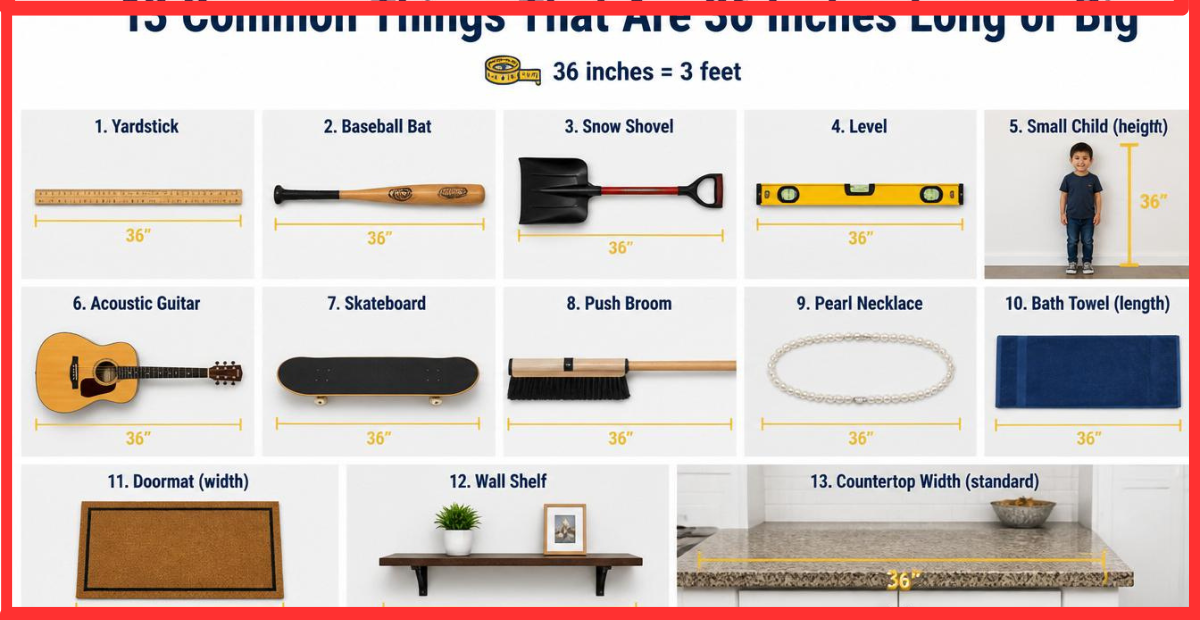
A length of 36 inches, which equals 3 feet, 1 yard, or 91.44 centimeters, appears everywhere around us. It’s hiding in homes, sports fields, workshops, furniture stores, and even musical instruments. Once you begin noticing it, you’ll spot this surprisingly common size almost daily.
Understanding 36 inches in feet isn’t just useful for shopping or decorating. It helps with home improvement, DIY projects, interior planning, and even estimating space without reaching for measuring tape every few minutes.
Human beings naturally compare things through familiar references. That’s why knowing several real world examples of 36 inches makes measurements much easier to visualize.
Let’s explore thirteen common objects and items that are roughly 36 inches long, tall, or wide, and discover why this dimension appears so often in design, construction, sports, and daily life.
| Item | Approximate 36-Inch Dimension |
|---|---|
| Yardstick | Exactly 36 inches long |
| Kitchen Countertop | About 36 inches high |
| Coffee Table | Around 36 inches long |
| Interior Door | Often 36 inches wide |
| Child Safety Gate | Up to 36 inches wide |
| Window Blinds | Commonly 36 inches wide |
| Acoustic Guitar | About 36 inches long |
| Baseball Bat | Up to 36 inches long |
| Golf Driver | Around 36–45 inches long |
| Youth Bicycle | Some models near 36 inches in length |
| Hockey Stick | Youth versions around 36 inches |
| Kayak Paddle Section | Roughly 36 inches long |
| Toddler Bed | About 36 inches wide |
| Measurement Conversion | Value |
|---|---|
| Inches | 36 inches |
| Feet | 3 feet |
| Yard | 1 yard |
| Centimeters | 91.44 cm |
Why 36 Inches Is Such an Important Measurement
Before diving into examples, it’s worth understanding why this size shows up so frequently.36 inches represents a classic human-scale dimension.
Designers, architects, engineers, and furniture makers often rely on measurements connected to human body measurements, human reach, and anthropometric standards.
Through centuries of observation, experts discovered that many functional spaces work comfortably around the three-foot mark.In imperial measurements, 36 inches equals exactly 1 yard or 3 feet. In metric measurements, it converts to 91.44 centimeters.
This measurement appears repeatedly in:
- Building codes
- Accessibility compliance
- Universal design
- Interior design
- Ergonomics
- Human-centered design
- Furniture sizing
- Construction measurements
- Sports equipment
The number almost feels accidental, but it really isn’t. It sits in a sweet spot between compact and spacious.
1. A Standard Yardstick
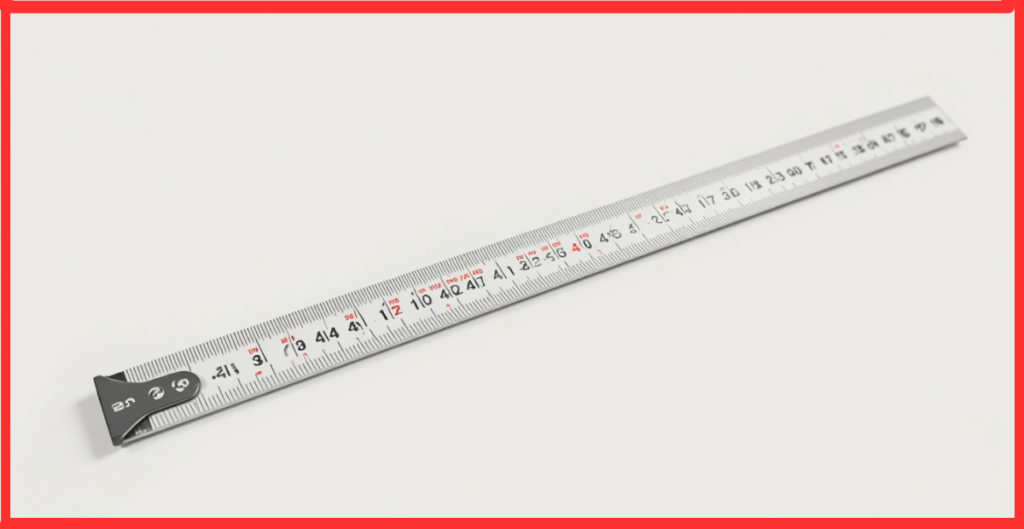
When people ask, “what does 36 inches look like,” the simplest answer is often a yardstick.A traditional yardstick measures exactly 36 inches long. Teachers, carpenters, artists, and students have used these tools for generations.
In fact, long before digital measuring devices became common, the humble yardstick was the king of quick measuring.
The concept of the yard has historical roots stretching back centuries. Some stories connect measurement standardization to rulers such as King Edward I, who played a role in formalizing English measurement systems.A yardstick remains one of the easiest 36 inch comparison references available.
2. Many Kitchen Countertops
One of the most overlooked things that are 3 feet long appears right inside your home.The standard countertop height in many homes is approximately 36 inches from the floor.
Whether you’re in a German kitchen, an American kitchen, or many modern designs worldwide, this height often serves as the ergonomic standard.Why 36 inches?
Because extensive studies in ergonomic design and human factors engineering found that this height works comfortably for a large percentage of adults during food preparation.This measurement contributes significantly to design efficiency and kitchen functionality.
3. A Typical Coffee Table Length
Many living-room tables fall very close to the three-foot range.A common coffee table often measures around 36 inches long, though exact dimensions vary by manufacturer. Designers frequently choose this length because it balances room proportion without overwhelming seating areas.
In modern interior design, furniture dimensions influence:
- Room spacing
- Spatial flow
- Walkways
- Furniture arrangement
- Hallway clearance
A three-foot coffee table often fits neatly into smaller living rooms while maintaining visual balance.
4. The Width of Some Interior Doors
Several residential doorways measure around 36 inches wide.A standard interior door width can vary, but 36-inch doors are especially important for accessibility routes and accessibility standards.
Homes designed according to universal design standards frequently use wider doorways because they better accommodate:
- A wheelchair
- Walkers
- Strollers
- Mobility aids
This is one reason why builders frequently include 36-inch doors in modern construction.
5. A Child Safety Gate
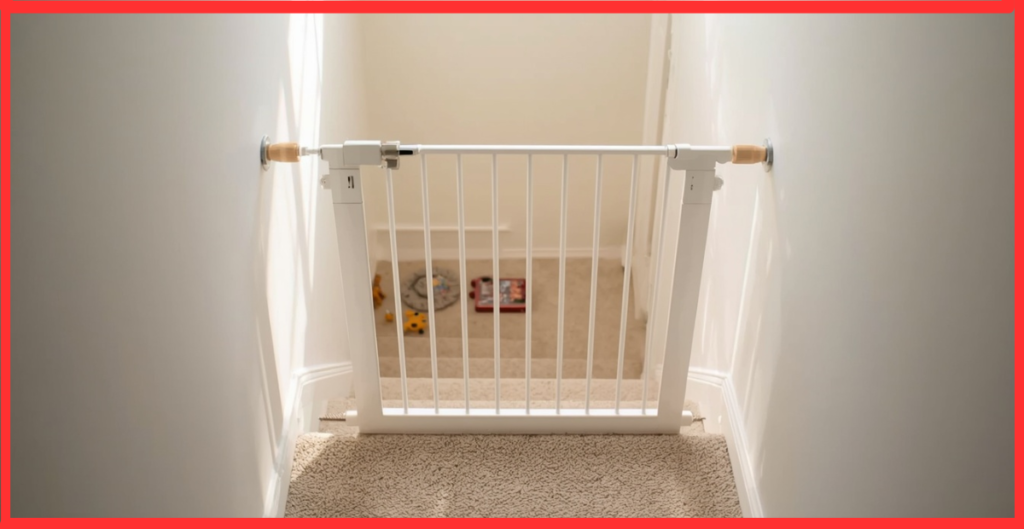
Parents encounter this measurement all the time.Many adjustable child safety gate models expand to roughly 36 inches wide. These gates help secure stairways, hallways, and room entrances.
Because many residential openings naturally fall near this dimension, manufacturers often design products around the three-foot benchmark.
It’s one of those everyday examples people use without realizing they’re interacting with a classic measurement standard.
6. Some Window Blinds and Shades
A surprising number of window blinds and window shades are manufactured in 36-inch widths.Window treatment companies often create products in standardized sizes to simplify installation and reduce costs.
When homeowners work on:
- Home layout planning
- Room design measurements
- Renovation projects
- Decorating upgrades
The 36-inch window size appears repeatedly.
It’s a practical example of how standard dimensions shape manufacturing decisions.
7. An Acoustic Guitar
Many full-sized acoustic guitar models measure close to 36 inches in overall length.The famous Spanish luthier Antonio de Torres helped establish many guitar proportions still used today. His influence transformed guitar design throughout Spain and eventually the rest of the world.
When you hold a guitar, you’re actually holding a carefully engineered balance of:
- Sound production
- Human reach
- Playing comfort
- Ergonomic proportions
A guitar provides one of the most recognizable examples of 36 inches you’ll find.
8. A Baseball Bat
Several adult Baseball bat models measure exactly or approximately 36 inches.Professional sluggers such as Babe Ruth, Aaron Judge, and Giancarlo Stanton have used bats approaching this length depending on their preferences and league regulations.
Bat length affects:
- Swing mechanics
- Reach
- Power generation
- Control
For taller players, a 36-inch bat often provides extended hitting coverage.Among all sports equipment, few objects make a better visual size reference.
9. Driver-Length Golf Clubs
Some golfers carry clubs approaching the three-foot benchmark.A modern Driver length varies by manufacturer and player preference, but many drivers measure around or beyond the 36-inch range.
Golf equipment designers carefully balance:
- Swing speed
- Accuracy
- Reach
- Comfort
Tiny changes in length can dramatically influence performance.It’s amazing, honestly, how one extra inch can completely alter a golf swing.
10. Youth Bicycles
Certain Youth bicycles designed for older children measure close to 36 inches in wheelbase or frame-related dimensions.
Bike manufacturers rely heavily on:
- Human proportions
- Rider comfort
- Growth expectations
- Ergonomic fit
A three-foot dimension often appears somewhere within bicycle geometry.When parents compare bike sizes, understanding how long is 36 inches can make shopping much easier.
11. Hockey and Lacrosse Sticks
Many Hockey sticks and Lacrosse sticks for younger athletes measure around the 36-inch range.Youth sports equipment is carefully scaled to support proper development and safety.
Manufacturers consider:
- Reach distance
- Control
- Balance
- Player height
The result is equipment that aligns with established anthropometric measurements.
For young athletes, a properly sized stick can make a huge difference in skill development.
12. Kayaking and Rowing Paddles Sections
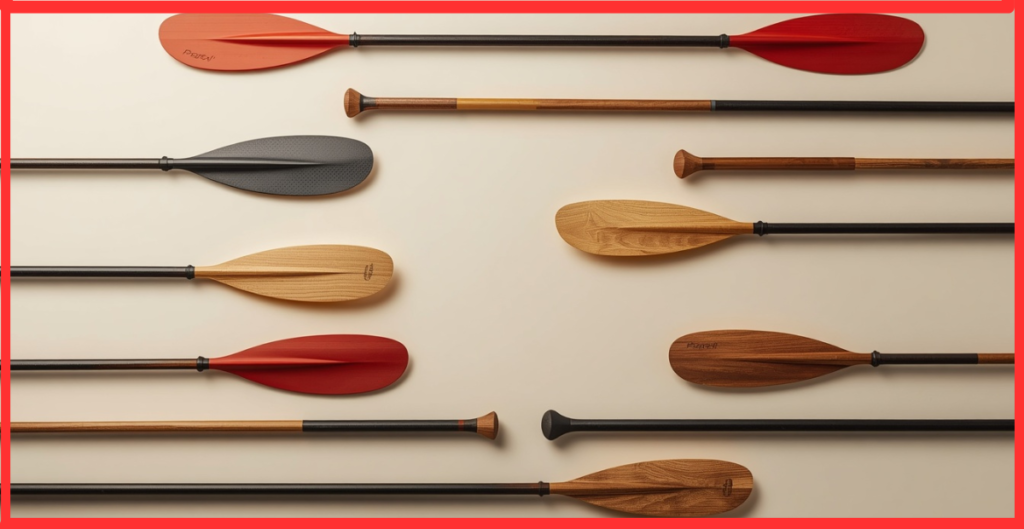
While complete paddles are often longer, portions of Kayaking paddles and Rowing paddles frequently include shaft sections around 36 inches.
Paddle dimensions influence:
- Efficiency
- Leverage
- Comfort
- Stroke mechanics
Designers study human-centered design principles to optimize performance.
Three feet represents a useful reference length within many paddle configurations.
13. A Toddler Bed
Many Toddler bed designs feature dimensions that include a 36-inch width.Parents transitioning children from a Crib often choose toddler beds because they provide comfort while maintaining manageable size.
Compared with a Twin bed, toddler beds occupy less floor space while still offering adequate sleeping room.
This measurement helps maintain:
- Safe movement
- Comfortable sleeping
- Efficient room layouts
It’s another excellent example of household dimensions built around practical human needs.
How Designers and Builders Use 36 Inches Every Day
The importance of 36 inches extends far beyond individual objects.
Architects and builders frequently rely on this measurement for:
- Walkway clearance
- Accessibility dimensions
- Furniture spacing
- Shelving dimensions
- Construction measurements
- Building regulations
- Accessibility compliance
After the Post-WWII housing boom, standardized residential construction became increasingly common. Measurements such as 36 inches gained popularity because they simplified planning and manufacturing.Modern designers continue using these dimensions because they support predictable, comfortable spaces.
A room that “feels right” often does so because countless measurements quietly follow established ergonomic principles.
Measurement Tools That Commonly Use 36 Inches
Several professional tools are built around the yard length.
Examples include:
- Drafting rulers
- Straightedges
- Levels
- Folding rulers
- Shelving rails
- Cutting mats
- Measurement tools used in workshops
Pattern designers and seamstresses also work with Fabric yardage, making 36 inches a familiar benchmark.
Many Pattern makers naturally visualize measurements in yard increments because fabric is frequently sold that way.It’s kinda funny, but once you work in a trade, your brain starts seeing everything in measurements.
Understanding 36 Inches Through Everyday Comparisons
Sometimes numbers become clearer when compared to familiar objects.A single Dollar bill is about 6.14 inches long.
Place nearly six bills end to end and you’ll approach 36 inches.Standard Printer paper measures 11 inches on its longer side. Three sheets lined up nearly equal a yard.
A typical Smartphone measures around 6 inches tall. Stack six phones and you’ll get surprisingly close to the three-foot mark.These comparisons help with visual estimation when measuring tools aren’t available.
How to Estimate 36 Inches Without a Ruler
Many people wonder how to estimate a yard without measuring equipment.
Try these references:
- One large stride is close to an average walking stride for many adults.
- Three standard sheets of printer paper lined end to end.
- The width of some interior doors.
- The height of many kitchen counters.
- A full-size guitar.
These practical references improve size visualization and help during quick DIY measurement guide tasks.Whether you’re arranging furniture or hanging artwork, understanding everyday size references can save time.
Why Humans Naturally Understand Three-Foot Measurements

Researchers studying body-based measurements often note that humans intuitively understand dimensions related to their own bodies.
The relationship between:
- Reach
- Stride length
- Arm span
- Movement space
creates natural measurement benchmarks.This explains why dimensions around three feet appear so often in functional design and comfortable reach distance calculations.
Design isn’t only about aesthetics. It’s also about making environments feel natural to the people using them.
Frequently Asked Question
36 inches example
A common 36 inches example is a yardstick, which measures exactly 36 inches long. Many kitchen countertops are also about 36 inches high.
how big is 36 inches
36 inches is equal to 3 feet, 1 yard, or 91.44 centimeters. It’s roughly the length of a standard acoustic guitar.
= 36 inches
36 inches = 3 feet = 1 yard = 91.44 centimeters. This measurement is widely used in home design, construction, and furniture sizing.
.36 inches
0.36 inches is a very small measurement, equal to about 0.91 centimeters. It is commonly used for thin materials, gaps, or small components.
36 inches wide
Something that is 36 inches wide measures 3 feet across. A standard interior door or some window blinds are common examples of this width.
Read this blog https://yordzenral.com/7-inches-long/
Conclusion
When someone asks, “how much is 36 inches?” the answer goes far beyond saying it’s 3 feet, 1 yard, or 91.44 centimeters.
The real answer lives in the objects surrounding us every day. From a coffee table to a Baseball bat, from a kitchen countertop to an Acoustic guitar, examples of this measurement appear almost everywhere.
These familiar references make it easier to understand 36 inches long, estimate dimensions, and make smarter decisions during shopping, decorating, construction, or DIY projects.
The next time you hear a measurement of 36 inches, don’t picture a number. Picture a guitar leaning against a wall, a countertop waiting for breakfast, or a yardstick sitting in a workshop. Suddenly the measurement feels real, and somehow a little less mysterious.
What everyday object helps you visualize 36 inches best? Think about it next time you’re estimating size, and you might be surprised how often this classic measurement shows up in your world.