

The first time I held a Pokémon card, it felt oddly important for something that could disappear inside a jacket pocket. It wasn’t even a rare one.
No shimmering foil, no legendary creature breathing fire across the artwork. Just a regular card from a slightly bent deck that had already survived a dozen schoolyard trades and a few accidental trips through a backpack.
Funny thing is, years later, I can still remember how it felt.For collectors, players, investors, and even curious parents who stumble into the world of the Pokémon TCG, understanding card dimensions is more important than it sounds.
A card that’s a fraction of a millimeter off can raise questions. A sleeve that’s too loose can annoy you every single time you shuffle. And a storage box that’s slightly too small? Well, that’s the kind of thing that makes collectors sigh dramatically at 2 AM.
This guide explores everything about pokemon card dimensions, from official measurements and thickness to jumbo cards, storage solutions, authentication tips, and how Pokémon cards compare with other trading card games.
Along the way, we’ll sprinkle in a few collector insights because numbers are useful, but stories make those numbers stick.
| Category | Measurement (mm) | Measurement (inches) | Notes |
|---|---|---|---|
| Standard Pokémon card size | 63 × 88 mm | 2.5 × 3.5 in | Same size as most modern trading cards |
| Aspect ratio | ~1 : 1.4 | ~1 : 1.4 | Rectangular portrait format |
| Card thickness | ~0.25–0.30 mm | ~0.01 in | Depends slightly on print batch |
| Sleeve size (standard fit) | ~66 × 91 mm | ~2.6 × 3.6 in | “Perfect fit” sleeves are smaller |
| Top loader size (standard) | ~76 × 101 mm | ~3 × 4 in | Used for protection and storage |
What Are the Dimensions of a Pokémon Card?
Let’s begin with the question most collectors ask:
What are the dimensions of a Pokémon card?
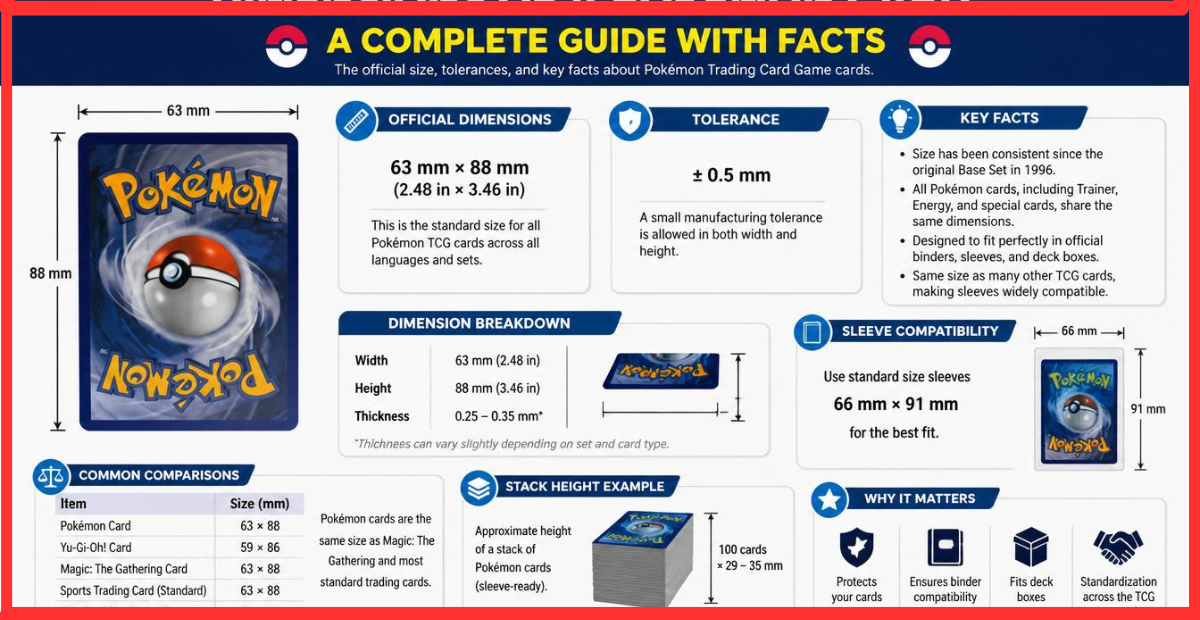
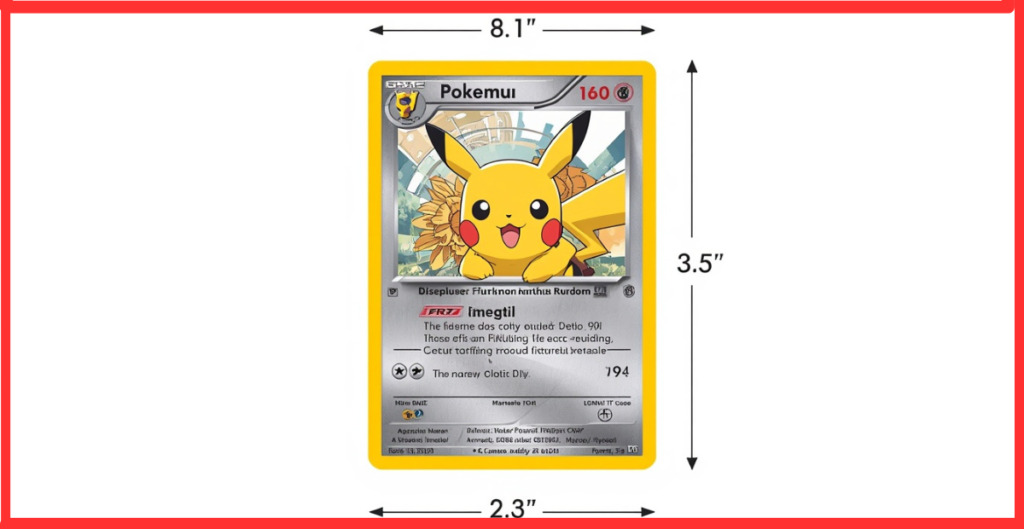
The official standard pokemon card size is:
- 2.5 × 3.5 inches
- 63.5 × 88.9 mm
These measurements have remained remarkably consistent throughout the history of the Pokémon Trading Card Game.
Whether you’re holding a modern Trainer Card, an Energy Card, or a vintage Base Set Card, the standard size remains the same.
When people search for pokemon card dimensions mm or pokemon card dimensions inches, these are the measurements they’re usually looking for.
Official Standard Measurements
| Measurement Type | Size |
|---|---|
| Card Width | 2.5 inches |
| Card Height | 3.5 inches |
| Metric Width | 63.5 mm |
| Metric Height | 88.9 mm |
These dimensions are identical to many other major TCGs, which is honestly kinda convenient for manufacturers of sleeves and accessories.The standard sizing helps maintain consistency during gameplay, storage, grading, and trading.
Pokémon Card Size Compared to Other Trading Card Games
One question that pops up fairly often is how Pokémon cards compare with other popular card games.
Pokémon vs Magic: The Gathering
Both Pokémon TCG and Magic: The Gathering use essentially the same standard trading card dimensions:
- 63.5 × 88.9 mm
- 2.5 × 3.5 inches
This means many sleeves designed for one game can comfortably fit the other.
Pokémon vs Yu-Gi-Oh!
Things get a little different with Yu-Gi-Oh!
Yu-Gi-Oh! cards are smaller:
- Approximately 59 × 86 mm
Because of this difference, Pokémon sleeves often feel loose on Yu-Gi-Oh! cards.
Pokémon vs KeyForge
KeyForge also uses standard-sized cards similar to Pokémon and Magic.
For collectors managing multiple games, this compatibility makes organizing collections a whole lot easier than people might expect.
Pokémon Card Dimensions: Why Size Matters More Than People Think
At first glance, a few millimeters don’t seem like much.Then you buy the wrong binder.Then you buy the wrong sleeves.
Then you discover your expensive card doesn’t fit inside the protective setup you planned.Suddenly, those millimeters become very important.
The consistency of pokemon card measurements helps with:
- Tournament legality
- Sleeve compatibility
- Card grading
- Storage systems
- Auction evaluations
- Counterfeit detection
Collectors often use precise measurements as one of the first checks when evaluating Authentic Pokémon cards versus suspicious copies.
Pokémon Card Thickness Explained
Another common question is:
How thick is a Pokémon card?
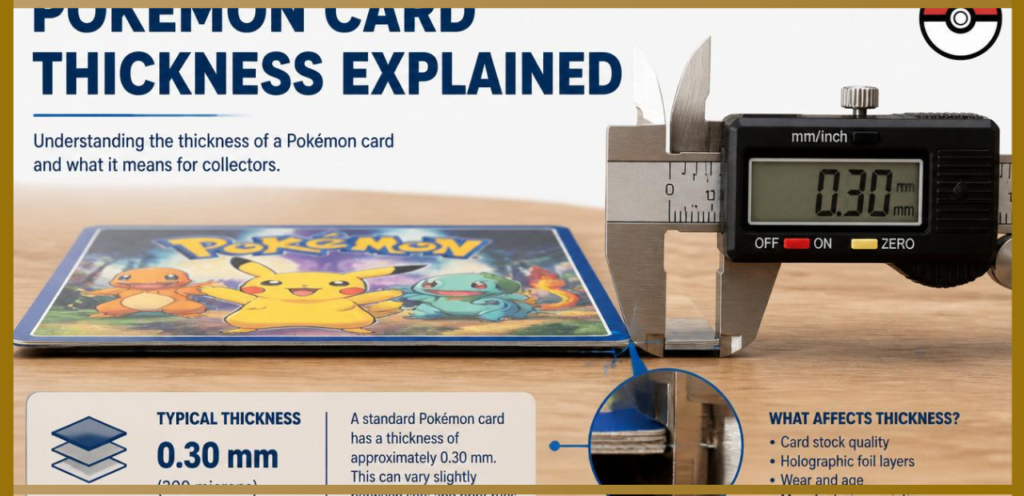
The average pokemon card thickness is approximately:
- 0.012 inches
- 0.305 mm
This thickness can vary slightly depending on production era and printing location, but genuine cards generally stay within a very narrow range.
Why Thickness Matters
Collectors use thickness measurements for:
- Authenticity verification
- Professional grading
- Detecting altered cards
- Spotting counterfeits
A fake card may feel noticeably thinner or thicker than official cardstock.
When handling genuine cards, there’s a subtle firmness to them. Hard to describe exactly. Almost like the card knows where it wants to bend and where it absolutely refuses.
Pokémon Card Weight Facts
Many people never think about card weight until they begin serious collecting.
The average pokemon card weight is:
- 1.78 grams
This figure applies to most standard cards.
Weight becomes useful for:
- Authenticity checks
- Sealed product evaluation
- Professional card analysis
Some experienced collectors combine weight, thickness, and texture checks when examining potential Fake Pokémon cards.
Oversized Pokémon Cards and Jumbo Cards
Not every Pokémon card follows standard sizing.Special promotional products often include larger versions.
Oversized Pokémon Card Dimensions
Most Oversized Pokémon Card and Jumbo Pokémon Card products measure approximately:
- 5 × 7 inches
- Around 127 × 178 mm
Older jumbo cards occasionally used slightly different sizing standards.
These giant cards are usually included in:
- Special Collection Box
- Premium collections
- Anniversary releases
- Promotional bundles
Why Collect Jumbo Cards?
Collectors enjoy jumbo cards because:
- Artwork appears larger
- Display options improve
- Limited availability increases appeal
A giant Charizard card hanging on a wall somehow feels both ridiculous and awesome at the same time.
Pokémon Card Sleeve Size Guide
Protecting cards starts with proper sleeves.
Standard Sleeve Dimensions
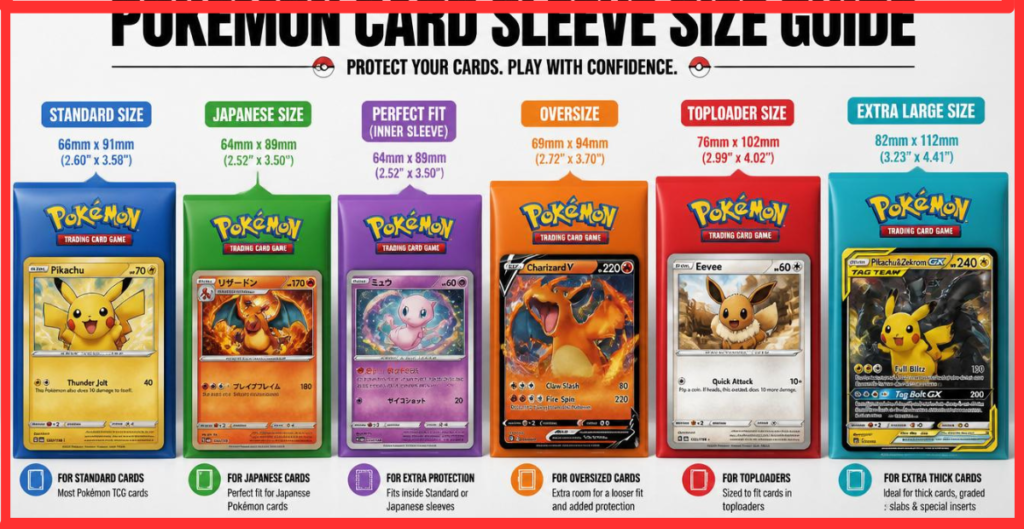
Common sleeve sizes include:
- 67 × 91 mm
- 67 × 95 mm
- 70 × 95 mm
These dimensions provide a comfortable fit around the standard Pokémon card.
Types of Sleeves
Penny Sleeve
The classic Penny Sleeve remains popular because it’s affordable and effective.
Good for:
- Bulk storage
- Temporary protection
- Trading collections
Premium Sleeve
A Premium Sleeve offers:
- Better durability
- Enhanced shuffle feel
- Increased clarity
Competitive players often prefer these.Polyethylene Sleeve and Polypropylene SleeveBoth Polyethylene Sleeve and Polypropylene Sleeve options are commonly used for long-term storage.Each material offers different levels of transparency and durability.
Pokémon Card Toploader Size Guide
For valuable cards, sleeves alone aren’t enough.
Most collectors use:
- Sleeve first
- Toploader
- Storage box
Standard pokemon card toploader size generally accommodates cards measuring 63.5 × 88.9 mm.
Why Use Toploaders?
Benefits include:
- Scratch prevention
- Bend protection
- Display readiness
- Safer shipping
If you’ve ever pulled a valuable Holographic Charizard, you’ll understand why people suddenly become very protective.
Pokémon Card Binder Pocket Dimensions
A quality binder is one of the smartest investments a collector can make.
Typical Binder Pocket dimensions support standard trading cards and often measure roughly:
- 67 × 95 mm
Choosing the Right Card Binder
A good Card Binder should offer:
- Acid-free materials
- Secure pocket loading
- Durable covers
- Archival-safe storage
For high-end collections, many collectors prefer side-loading pockets because cards are less likely to slip out.
Pokémon Card Storage and Protection Guide
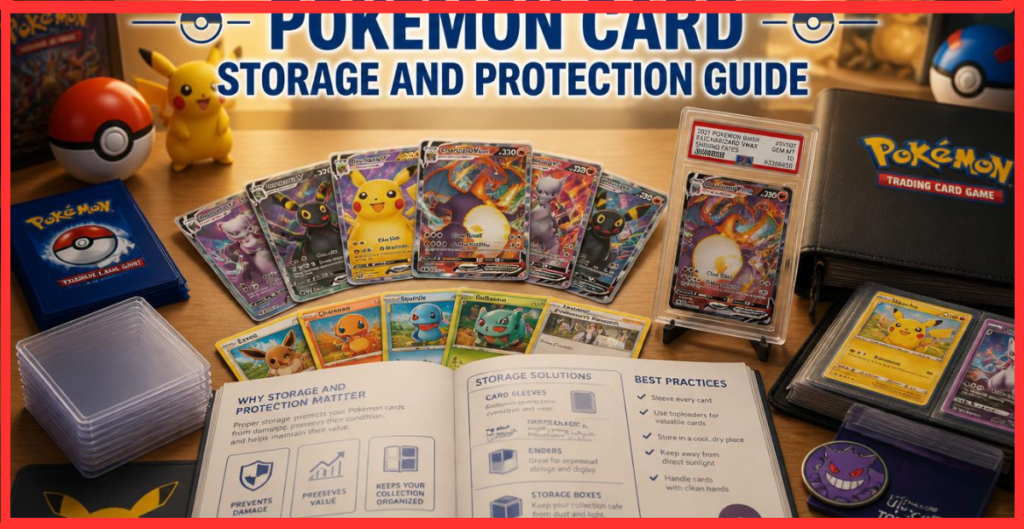
Keeping cards safe isn’t complicated, but consistency matters.
Essential Storage Tools
Collectors often rely on:
- Card sleeves
- Toploader
- Deck Box
- Card Storage Box
- Card Binder
- Playmat
Protection Strategies
Proper pokemon card protection involves:
- UV Protection
- Humidity protection
- Scratch prevention
- Temperature stability
Sunlight can slowly fade colors over time. It’s sneaky like that. A card can look perfect for months and then one day the artwork feels just a little less vibrant.
Card Preservation Tips
For excellent Card preservation:
- Avoid direct sunlight
- Store cards vertically
- Use archival materials
- Keep humidity controlled
These habits help maintain Mint condition status.
Pokémon TCG Gameplay and Card Types
Dimensions matter during actual gameplay too.
The Pokémon TCG gameplay experience relies on consistent sizing for smooth shuffling and deck management.
Common Card Types
Basic Pokémon
Every deck usually begins with a Basic Pokémon.Evolution PokémonThese evolve from Basic Pokémon and often provide stronger abilities.
Trainer Card
The Trainer Card category includes numerous strategic options.
Item Card
An Item Card provides immediate effects.
Supporter Card
A Supporter Card typically offers powerful actions but has usage restrictions.
Stadium Card
The Stadium Card changes battlefield conditions.
Energy Card
The classic Energy Card powers attacks.
Special Energy
Special Energy cards provide unique benefits.
All these cards follow standard sizing to ensure fair play and efficient Deck Building.
Pokémon Card Collecting, Auctions, and Value
For many people, collecting becomes a lifelong hobby.A collection often starts with one card and somehow grows into several binders before anyone notices.
Valuable Collector Categories
Collectors frequently seek:
- Rare Card
- Holographic Card
- Rare Pokémon cards
- Vintage cards
- Holo cards
- Promotional releases
Famous Examples
Among the most iconic cards ever printed are:
- Charizard
- Holographic Charizard
- Base Set Charizard
These cards remain central figures in collecting culture.
Auctions and Card Investment
The world of Auction sales has transformed card collecting.
Factors affecting Card value include:
- Rarity
- Condition
- Popularity
- Historical significance
Some collectors view cards as a form of Card investment, while others simply enjoy the nostalgia.
Honestly, most people are probably a little bit of both.
Authentic Pokémon Cards vs Counterfeit Cards
One of the most practical reasons to know measurements is authentication.
Signs of Authentic Cards
Authentic Pokémon cards generally feature:
- Correct dimensions
- Proper weight
- Consistent cardstock
- Accurate Card texture
- Appropriate Card flexibility
Counterfeit Detection Techniques
Effective Counterfeit Detection may include checking:
- Thickness
- Weight
- Printing quality
- Edge cuts
- Light tests
Many fake cards fail measurement tests because manufacturers don’t replicate official standards perfectly.Knowledge of pokemon card specifications becomes surprisingly valuable here.
The Role of Measurements in Card Grading
Professional Card Grading companies examine cards with incredible precision.
They assess:
- Centering
- Surface quality
- Corners
- Edges
- Dimensions
A card that appears flawless to an everyday collector might reveal tiny manufacturing differences under professional inspection.That’s part of what makes grading so fascinating. It’s detail turned into an art form.
Pokémon Card Dimensions and the Trading Community
Measurements may sound technical, but they connect deeply with the human side of collecting.
The global Trading Community thrives on trust.
Whether through:
- Trading
- Local meetups
- Online marketplaces
- Tournament events
- Schoolyard trading
Collectors depend on standardized card dimensions.Those measurements create a shared language. A card printed in one country can fit seamlessly into a binder owned by someone thousands of miles away.
That’s kinda beautiful when you think about it.
Frequently Asked Question
Pokemon Card Art Dimensions
The artwork area on a standard Pokémon card is smaller than the full card size and is designed to fit within the card’s borders, text box, and frame elements. Exact art dimensions can vary slightly between card layouts, generations, and special editions.
read this Blog : https://yordzenral.com/how-long-is-15-inches/
Conclusion: Small Cards, Big Impact
Understanding pokemon card dimensions is about much more than memorizing numbers. Yes, knowing the official pokemon card size, thickness, weight, sleeve compatibility, and storage requirements helps protect your collection.
It also assists with gameplay, authentication, grading, and long-term preservation.
The key measurements to remember are simple:
- Standard size: 2.5 × 3.5 inches
- Metric size: 63.5 × 88.9 mm
- Thickness: 0.012 inches (0.305 mm)
- Weight: 1.78 grams
Whether you’re storing a favorite Collectible Card, building a competitive deck for Competitive Play, hunting for Rare pulls from a Booster Pack, organizing an Elite Trainer Box (ETB),
or preserving a treasured Base Set Charizard, these measurements provide the foundation for smart collecting.
The next time you hold a Pokémon card, take a second to appreciate that tiny rectangle. It’s not just cardboard. It’s a piece of gaming history, a collectible, a memory, and sometimes the start of a hobby that follows people for decades.
And if you’ve got a favorite Pokémon card story, an unforgettable pull, or a treasured card hiding safely in a binder somewhere, share it with fellow collectors.
The best part of the hobby has never really been the measurements. It’s the people and memories attached to them.