

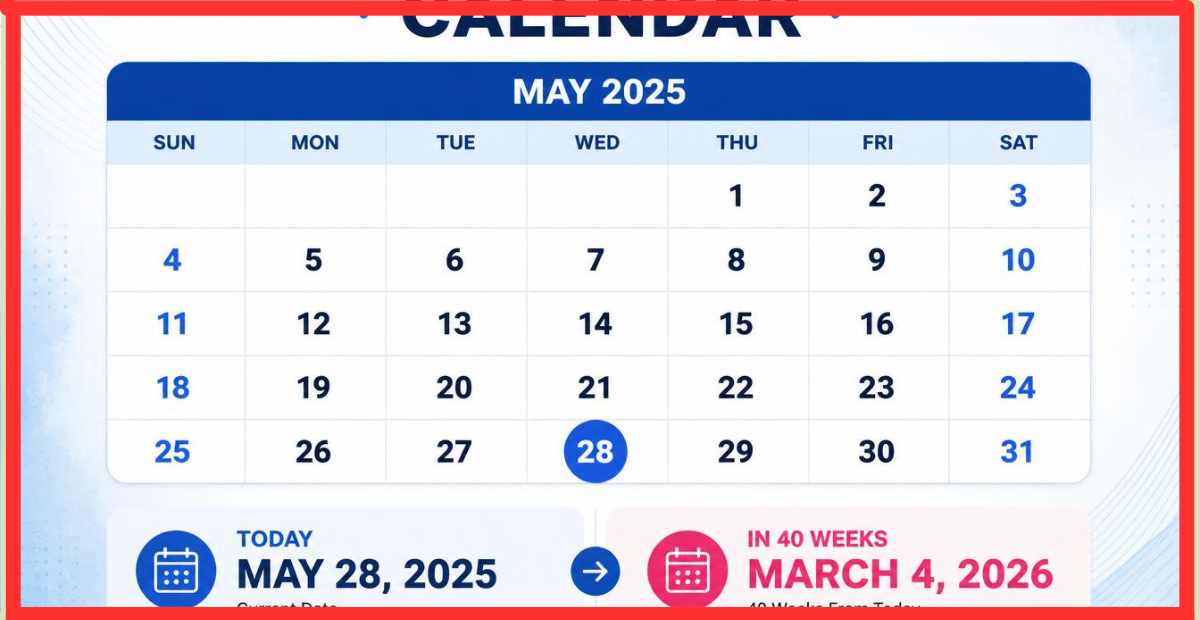
If you’ve landed here wondering What Date Is 40 Weeks From Today, the quick answer is simple: 40 Weeks From Today from July 4, 2026 (Saturday) is April 10, 2027 (Saturday).
That means adding Forty Weeks, or 280 Days, to the current date using a reliable Date Calculator or careful Calendar Calculation.
Funny thing is, people search for future dates for all sorts of reasons. Someone is planning a pregnancy milestone, another person is counting toward a project deadline, while someone else is just trying to figure out when an important celebration will arrive.
Time doesn’t really rush, yet somehow it quietly slips past us anyway. Kinda strange when you stop and think about it.
Whether you’re planning ahead or simply curious, this guide explains the calculation, shows different ways to verify it, and explores how week-based date counting actually works.
| Start Date | Weeks From Today | Days Equivalent | Future Date | Day of Week |
|---|---|---|---|---|
| July 4, 2026 | 40 weeks | 280 days | April 10, 2027 | Saturday |
What Date Is 40 Weeks From Today?
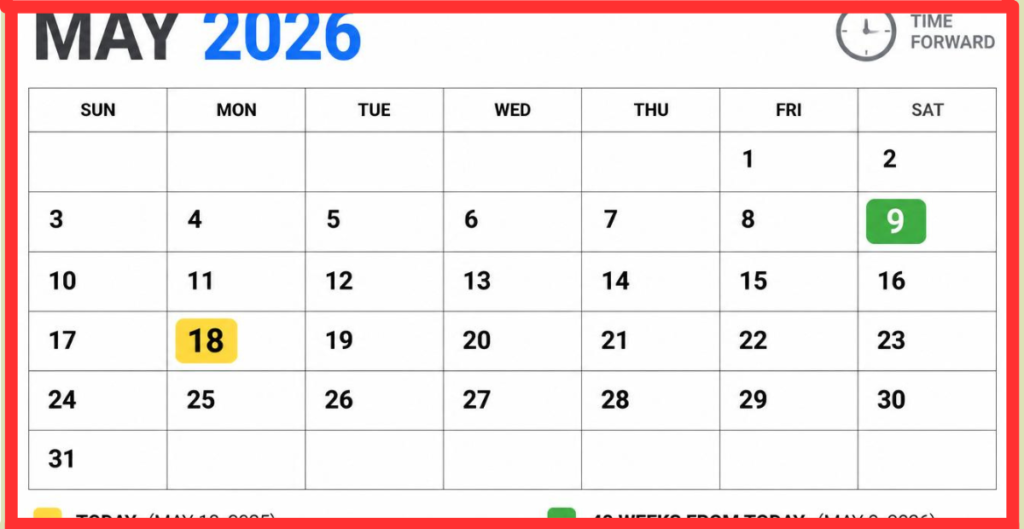
Starting with the Start Date of July 4, 2026, which falls on a Saturday, adding exactly 40 weeks gives us the following Future Date:
| Calculation | Result |
|---|---|
| Start Date | July 4, 2026 |
| Duration Added | 40 Weeks (280 Days) |
| End Date | April 10, 2027 |
| Day of the Week | Saturday |
So if you’re asking what date is 40 weeks from today, what day is 40 weeks from today, or what date will it be in 40 weeks, the answer is:
April 10, 2027 (Saturday).
It looks neat on paper, but behind this answer sits a surprisingly interesting bit of Calendar arithmetic. People often assume months and weeks line up perfectly, but they dont.
Weeks always contain seven days, while months keep changing their lengths, making week-based calculations much more consistent.
Understanding 40 Weeks From Today
The phrase 40 Weeks From Today simply means moving forward exactly forty seven-day periods from the Current date. Since every week has seven days, the math is refreshingly simple.
- 40 weeks
- 280 Days
- 6,720 hours
- 403,200 minutes
- 24,192,000 seconds
Every one of those measurements points to the same Time duration, only expressed differently. It feels almost like translating one language into another.
Many online searches include phrases like:
- what date is 40 weeks from today
- 40 weeks from today
- forty weeks from now
- date in 40 weeks
- 40 weeks later
- date after forty weeks
- future calendar date
All of these are asking for the same Relative Date, just using slightly different wording.
How to Calculate 40 Weeks From Today
If you enjoy doing calculations yourself, here’s the process.Start with the Date From Today, which is July 4, 2026.
Multiply:
- 40 weeks × 7 days = 280 Days
Then count forward 280 calendar days.The final Target date becomes:
April 10, 2027
This approach is called Forward date calculation and forms the basis of most online date tools. It sounds technical, but really its just careful counting.
Some people prefer manual calendars while others trust software. Either method reaches exactly the same destination when performed correctly.
Using a Date Calculator

A modern Date Calculator removes nearly all of the guesswork.
Instead of counting weeks by hand, you simply enter:
- Start Date
- Number of weeks
- Direction (future)
The calculator instantly produces the End Date.
A quality future date calculator, weekly date calculator, calendar week calculator, or date offset calculator automatically handles:
- leap years
- month lengths
- year transitions
- weekday matching
This is why many professionals use a Date and Time Calculator instead of relying on manual counting.
Common searches include:
- 40 week calculator
- 40 weeks from today calculator
- future date calculator
- weeks from now calculator
- calendar date finder
- calculate future date
- calculate weeks ahead
They’re all variations of the same helpful idea.
Why Weeks Are Easier Than Months
Months can have:
- 28 days
- 29 days
- 30 days
- 31 days
Weeks never change.
That’s why many planners rely on Week counting instead of month counting. A fixed seven-day cycle keeps calculations predictable.
This also explains why searches like:
- today’s date plus 40 weeks
- add 40 weeks to today
- calculate date by weeks
- exact date in 40 weeks
are easier to answer accurately than questions involving several calendar months.Weeks are wonderfully stubborn they refuse to change their size.
Calendar Calculation Explained
A proper Calendar Calculation isn’t just adding numbers together.
It considers:
- Date progression
- Calendar weeks
- Weekly interval
- Date timeline
- Relative time
- Date reference
- Time interval conversion
Each day advances one position on the calendar while preserving chronological order.
Think of the Calendar like a giant roadmap where every date has its own exact address. Moving forty weeks simply means walking 280 carefully measured steps forward.
Future Date Calculation vs Backward Date Calculation

People often need dates in both directions.
Forward date calculation
Examples include:
- 40 weeks from today
- 41 weeks from today
- 42 weeks from today
- 43 weeks from today
- 44 weeks from today
These calculate future events.
Backward date calculation
Other searches include:
- 41 weeks ago
- 42 weeks ago
- 43 weeks ago
- 44 weeks ago
- Weeks Ago
- weeks ago from today
These determine past dates instead.Both methods rely on the exact same mathematical rules, just moving through the calendar in opposite directions.
Why People Search for 40 Weeks Ahead
There are surprisingly many reasons someone wants to know a Future Date.
Pregnancy planning
Forty weeks represents the traditional length of a full-term pregnancy, making it one of the most searched date calculations online. Of course, babies don’t exactly follow calendars they tend to have their own tiny opinions about timing.
Project planning
Large projects often use weekly schedules because they’re easier to manage.
Academic planning
Schools frequently organize semesters around weeks instead of months.
Financial planning
Businesses sometimes forecast revenue forty weeks ahead for long-term planning.
Personal milestones
People count toward birthdays, anniversaries, vacations, retirement plans, and family reunions.
Every calculation starts with one simple question:
“What happens after forty weeks?”
40 Weeks Equals How Many Days?
One of the most common searches is:
40 weeks equals how many days
Here’s the answer.
| Time Unit | Equivalent |
| Weeks | 40 |
| Days | 280 Days |
| Hours | 6,720 hours |
| Minutes | 403,200 minutes |
| Seconds | 24,192,000 seconds |
This is a straightforward Weeks to days conversion.Sometimes expressing time differently makes large durations feel oddly smaller or bigger. Human brains are weird like that.
How Many Months Is 40 Weeks?
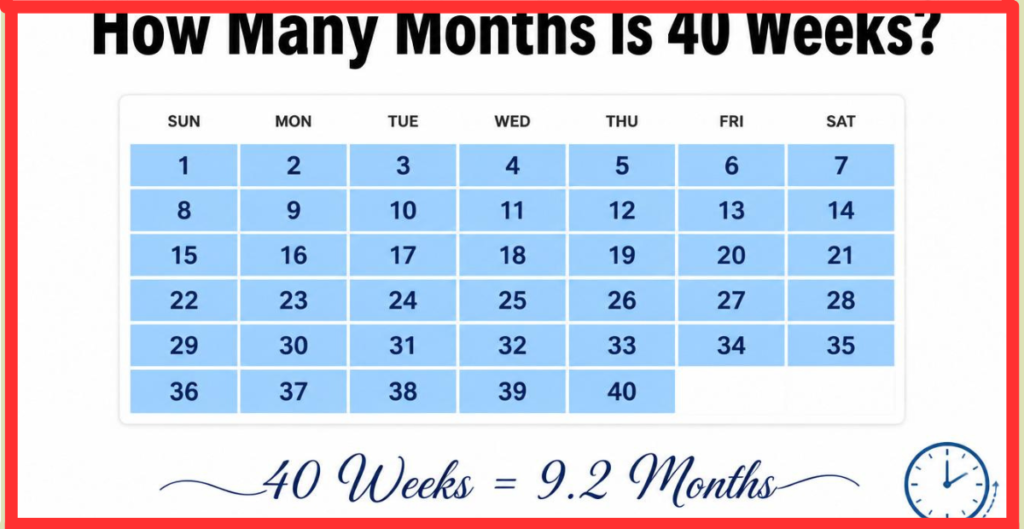
Another popular question asks:
how many months is 40 weeks
The answer depends slightly on how months are measured.
Generally:
- 40 weeks is about 9.2 months.
- Pregnancy is commonly described as forty weeks.
- Calendar months vary in length.
Because months aren’t equal, professionals prefer weeks when precision matters.
Common Searches Related to 40 Weeks
People phrase the same question in many different ways.
Some examples include:
- date after 40 weeks
- date after 280 days
- 280 days from today
- 280 days from today date
- future date after 40 weeks
- exact date 40 weeks from today
- date 40 weeks from now
- calculate the date 40 weeks from today
- what is the date 40 weeks from today
- what date is forty weeks from now
- date after 40 weeks from today
- calendar for 40 weeks from today
- calculate 40 weeks from today
- 40 weeks ahead
- count 40 weeks
Although each search uses different wording, they all point to the same destination:
April 10, 2027.
Understanding Date Difference
The concept of Date Difference compares two dates to determine the amount of time separating them.
Between:
- July 4, 2026
- April 10, 2027
there are exactly:
- 40 weeks
- 280 Days
This measurement is useful for contracts, schedules, educational timelines, and personal planning.
Time Duration Calculator vs Date Calculator
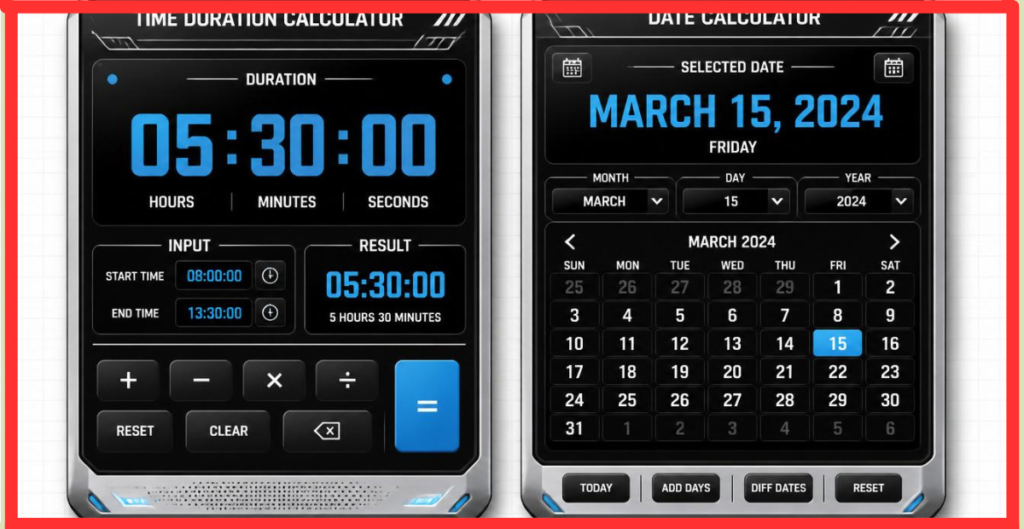
Many people confuse these two tools.A Time Duration Calculator measures the amount of time between dates.A Date Calculator determines a new date after adding or subtracting time.Both are useful, but they answer slightly different questions.
If someone asks:
“What is the Date From Today after forty weeks?”
the Date Calculator is the better choice.
If someone asks:
“How many days are between these dates?”
the Time Duration Calculator becomes more appropriate.
Real-Life Examples of Date Counting
Imagine today’s Start Date is July 4, 2026.
You might be planning:
- a construction project
- maternity leave
- a training schedule
- a sports season
- a software release
- a graduation goal
- a savings challenge
Adding forty weeks provides a practical planning horizon.It’s long enough to accomplish something meaningful, yet not so distant that it feels impossible.
Why Online Date Tools Are So Popular
Manual calculations can become confusing, especially across different months.
Modern tools instantly perform:
- Current date calculation
- Relative date calculator
- Week interval calculator
- Date offset calculator
- Future weeks calculator
- Past weeks calculator
- Date after specific weeks
- Calendar lookup
Most people appreciate not having to count tiny calendar squares one by one. Honestly, after about week eighteen, almost everybody loses track at least once.
Tips for Accurate Calendar Calculations
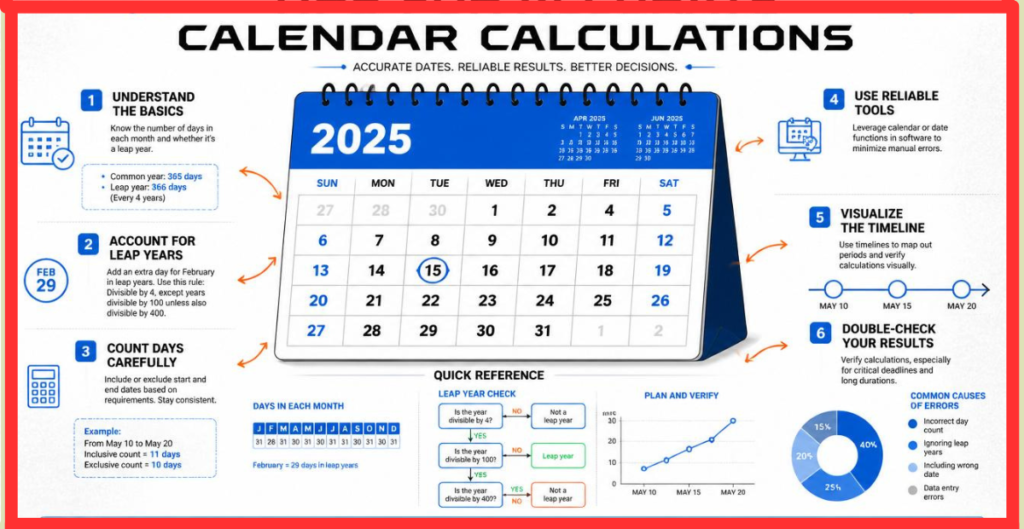
When calculating dates:
- Always confirm your Start Date.
- Count complete seven-day weeks.
- Use calendar-based tools when possible.
- Double-check leap years if calculating manually.
- Verify the final weekday.
- Compare results with a trusted Date Calculator.
- Save important planning dates in your calendar.
These simple habits reduce mistakes significantly.
Related Week Calculations
After finding forty weeks, people often continue exploring nearby dates.
Related searches include:
- 41 weeks from today
- 42 weeks from today
- 43 weeks from today
- 44 weeks from today
Likewise, many also search:
- 41 weeks ago
- 42 weeks ago
- 43 weeks ago
- 44 weeks ago
Together, these searches help build a complete understanding of Relative time and long-term planning.
Frequently Asked Questions
What date is 40 weeks from today?
Starting from July 4, 2026, forty weeks later is April 10, 2027 (Saturday).
What day is 40 weeks from today?
It falls on Saturday.
How many days are in 40 weeks?
Exactly 280 Days.
Can I calculate this manually?
Yes. Multiply 40 by 7, then add 280 days to the starting date.
Which calculator should I use?
A reliable Date Calculator, Time Duration Calculator, or Date and Time Calculator all work well for verifying the answer.
Read this blog https://hynoval.com/how-long-until-245-pm/
Final Thoughts
Knowing What Date Is 40 Weeks From Today is more useful than it first appears. Whether you’re planning a major life event, tracking a pregnancy, organizing a long-term project, or simply satisfying your curiosity, calculating dates accurately helps remove uncertainty.
Starting from July 4, 2026 (Saturday), adding Forty Weeks or exactly 280 Days brings you to April 10, 2027 (Saturday).
It’s a straightforward piece of Calendar Calculation, yet one that quietly powers everything from personal milestones to professional scheduling.
The next time you need to calculate future date, perform a week-based date calculation, compare a Date Difference, or find a Future Date, remember that weeks provide one of the most reliable ways to measure time.
They stay consistent even when months decide to behave a little differently. And perhaps that’s why counting by weeks just feels… calmer somehow, even if calendars never stop turning.