

There’s something oddly emotional about opening a fresh bag of chips, like it’s a small ceremony nobody really planned but everybody understands.
You tear that top seam a bit unevenly, maybe too excited, and suddenly the smell of potato chips or tortilla chips just spills into the room like a memory you didn’t ask for but still kinda needed.
Funny thing is, nobody really talks about how deeply “size” matters in this whole snack world, especially when you start noticing the standard chips bag size chart hiding behind all that crinkle and air.
Somewhere between vending machine grabs and late-night movie bowls, chip bags started speaking their own quiet language.
A personal pack feels like a whisper, a party bag feels like someone shouting “share me or don’t, I’m not judging.”
And yes, somewhere in this crunchy universe sits a whole measurement system that’s more scientific than people think, involving ounces, grams, nitrogen gas, and oddly enough, a bit of emotional impulse eating too.
Snack history even ties back to names like George Speck, often associated with early potato chip invention lore in Saratoga Springs, New York, USA, where the legend of thin-sliced fried potatoes began to take shape.
Later, food culture platforms like Spoon University and media outlets like Newsday would casually explain what our ancestors probably never imagined: that chips would one day need charts.
| Aspect | Description |
|---|---|
| Everyday snack | A chips bag is commonly seen as a quick, tasty snack enjoyed during breaks, movies, or gatherings. |
| Emotional comfort | For many people, it goes beyond hunger—it provides comfort, nostalgia, and stress relief. |
| Social element | Chips are often shared among friends and family, making them part of social bonding moments. |
| Cultural presence | From street shops to global brands, chips have become a universal snack across cultures. |
| Marketing influence | Advertising and branding turn simple chips into lifestyle products associated with fun and enjoyment. |
| Beyond food | In some cases, a chips bag symbolizes habits, routines, and even emotional coping mechanisms. |
The Hidden Story Behind the Standard Chips Bag Size Chart
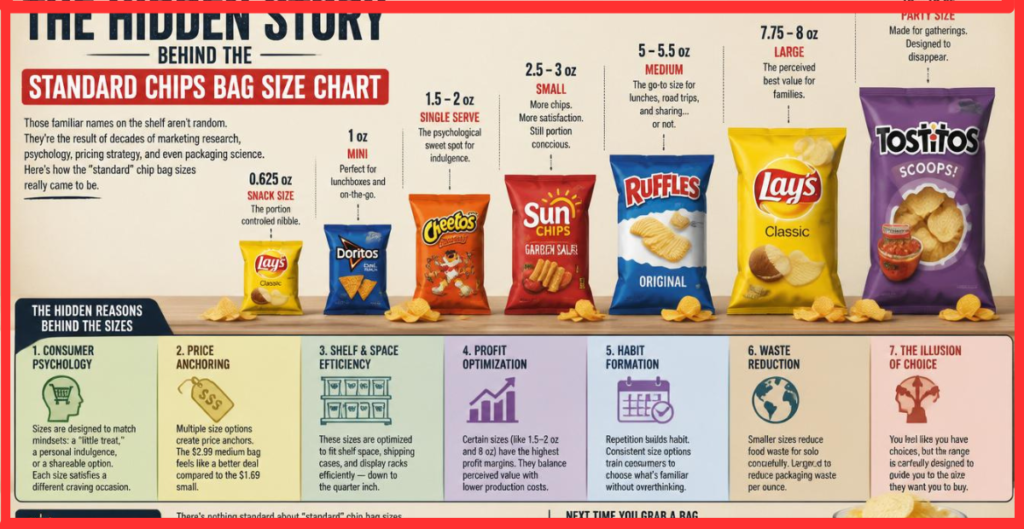
The idea of a standard chips bag size chart didn’t appear overnight, it kinda crept in through grocery shelves, warehouse club stores, and vending machine distribution systems that needed order in chaos.
Packaging engineers, snack psychologists, and potato chip manufacturers quietly agreed on ranges, even if nobody officially announced it like a royal decree.
Behind every bag of Lay’s, Ruffles, Doritos, or Sun Chips, there’s a calculated weight decision mixed with marketing intuition.
A “standard” isn’t just size, it’s behavior prediction, like how much people snack while watching movies or pretending to study but actually scrolling their phone.
- Personal snack packs (1–2.87 oz) feel like a quick emotional fix, not really meant to be shared, unless you’re forced by a friend who says “just one chip”
- Small or mini share bags (3–5 oz) usually disappear faster than expected, especially during impulse eating moments
- Regular bags (6.8–10 oz) quietly become the default household snack without anyone deciding it formally
- Medium or large packs (10–12 oz) start acting like they belong to a group, not an individual
- Family size (~10.5 oz) often lies about being “for everyone” but somehow one person finishes it
- Party bags (13–15.75 oz) are the real social performers at gatherings, almost like they came to be seen
- Mega or bulk sizes (18–30 oz) belong in warehouse club stores and sometimes feel like they judge your life choices a little
Somewhere in this structure, even photographers like Zach Rowlandson and Bryce Carithers, known for capturing everyday visual storytelling on platforms like Unsplash and Pexels, have indirectly documented snack culture in still life imagery that makes chips look almost philosophical.
Personal to Mega: Understanding Chip Bag Size Categories
The standard chips bag size chart becomes clearer when you realize it’s less about math and more about human behavior patterns wrapped in foil and air. Yes, mostly air actually, and we’ll get to that weird truth soon enough.
- Personal bags are perfect for lunchboxes, vending machine runs, and those “I just need something” moments
- Small bags often vanish during study sessions where concentration and crunching compete equally
- Regular bags of Lay’s Classic or Doritos Nacho Cheese become the unofficial default for casual snacking
- Medium packs of Ruffles ridged chips feel heavier in hand, like they mean business
- Family size bags of Lay’s Kettle Cooked Jalapeño sometimes survive a single evening, sometimes don’t
- Party sizes show up at birthdays and movie nights like they’ve been invited personally
- Mega packs quietly support group snacking behavior that nobody wants to admit exists
Culturally, snack portions vary a lot. In the USA, bigger bags are normal, while in parts of Europe, smaller controlled portions are more common, which says a lot about portion control psychology and food environment design.
Standard Chips Bag Size Chart Explained in Real Life Moments
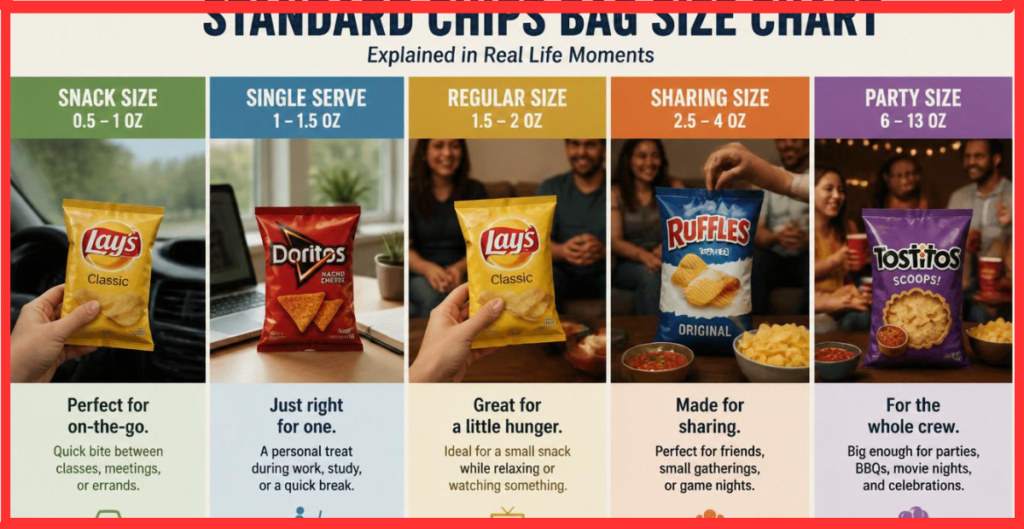
If you map the standard chips bag size chart to daily life, it suddenly feels less like a technical document and more like emotional timing. A 1 oz bag hits differently at midnight than at noon, just saying.
- Personal size bags show up during solo walks, train rides, or emotional snack breaks
- Small packs become silent companions during long meetings or “just five more minutes” procrastination
- Regular bags appear in movie nights where nobody agrees on what to watch anyway
- Medium bags dominate casual hangouts where conversation flows more than planning
- Family size packs often sit in kitchens waiting to be “opened later” and then vanish mysteriously
- Party bags become social anchors at gatherings, almost like edible furniture
- Mega bags enter house parties and leave as legends
There’s even research chatter on platforms like Newsday and discussion threads influenced by Spoon University that talk about how snack size impacts consumption speed and sharing behavior, especially in group settings.
Packaging Science: Nitrogen, Air and Crunch Preservation Mechanics
Here’s where things get slightly scientific but still weirdly fascinating. Ever opened a chip bag and thought, “why is this mostly air?” That’s not a scam, it’s packaging science doing its job.
- Chip bags are filled with nitrogen gas to protect freshness and prevent oxidation
- That “air” helps preserve crunch preservation mechanics so chips don’t turn sad and soggy
- Potato chips packaging sizes are designed around both weight and protective volume
- Kettle-cooked chips like those from Cape Cod or Miss Vickie’s are denser, so packaging feels slightly heavier
- Veggie chips and corn chips behave differently in compression, affecting bag shape
- Flavored chips like barbecue or ranch-coated varieties require extra coating protection
- Packaging engineers balance size, cost, and shelf life using extremely precise measurement systems
It’s kind of funny, but without nitrogen, your favorite Lay’s Sweet Southern Heat Barbecue chips would basically turn into disappointment crumbs before they ever reached your mouth.
Brands, Flavors and the Psychology of Portion Control
Brands don’t just sell chips, they sell timing, mood, and sometimes regret. The standard chips bag size chart is deeply tied to how companies like Herr’s, W
ise Foods, Terra Chips, and even Monster Energy adjacent snack marketing ecosystems think about consumption energy (yes, snack and energy marketing often overlap in retail psychology).
- Lay’s Oven Baked Original appeals to “I’m being healthy-ish” snack moments
- Doritos Cool Ranch tends to dominate social snack bowls and group chaos eating
- Ruffles ridged chips feel like they were designed for dip-heavy situations
- Sun Chips often show up in slightly more mindful snack decisions
- Lay’s Classic is the universal baseline, like the grammar of chips
- Doritos Nacho Cheese carries strong impulse buying energy
- Miss Vickie’s kettle chips weight feels heavier but more satisfying per bite
Snack psychology plays a huge role here. People rarely measure serving size correctly (1 oz standard serving gets ignored a lot), which leads to what researchers call portion distortion. In simple words, we eat what the bag “looks like,” not what it “means.”
Cultural Snacking: Parties, Movies, and Global Differences
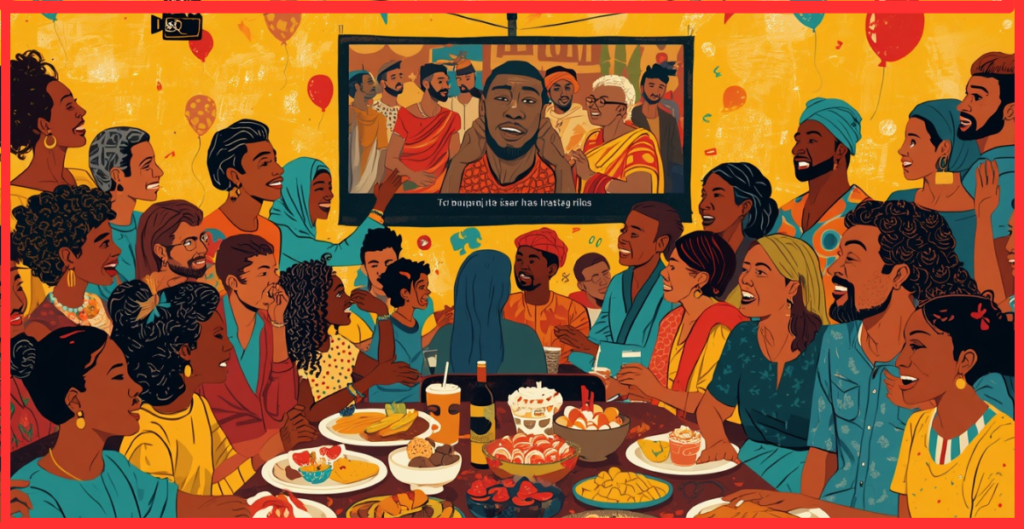
Snacking is basically culture in crunchy form. Whether it’s a party in a small apartment or a big outdoor gathering, chips always find a way in.
- Movie nights rely heavily on group snacking dynamics where sharing is optional but expected
- Party food consumption behavior often ignores serving size logic completely
- Snack sharing behavior differs between families, friends, and strangers surprisingly
- Cultural snack portion differences show up strongly between USA and Europe
- Vending machine snacks push personal-sized packs into convenience culture
- Warehouse club bulk purchasing changes how families think about snack budgeting
- Lunchbox snacks usually stick to controlled portion packs for practicality
Even global snack identity is shaped by brands like Lay’s and Ruffles, which adapt flavors regionally while keeping size categories mostly consistent.
How to Read a Chips Bag Weight Chart Like a Pro
Understanding a chips bag weight chart is basically learning a snack language nobody taught you in school. Ounces, grams, inches of bag puffiness it all matters more than it should.
- 1 oz equals about 28 grams, the classic serving benchmark
- Small differences in grams can change perceived fullness significantly
- Chip density varies between thin-cut and kettle-cooked styles
- Air-filled chip bags affect visual size more than actual content
- Packaging weight includes protection volume, not just food
- Snack budgeting often depends on weight-to-price perception
- Bulk retail packs may seem cheaper per gram but encourage overconsumption
Even media discussions by Newsday and food culture breakdowns by Spoon University have pointed out how misleading visual packaging can be when consumers estimate quantity.
Freuently Asked Question
chip bag sizes chart
Chip bag sizes are usually measured by weight (oz or grams), ranging from small single-serve packs (1–2 oz) to large family-size bags (8–12 oz or more).
how big is a 8 oz bag of chips
An 8 oz bag is a large sharing size, usually enough for 4–6 people depending on appetite. It is roughly 225 grams and feels like a full family pack.
chips bag sizes
Common chip bag sizes include 1 oz (mini), 1.5–2 oz (single serve), 4–6 oz (regular), and 8–12 oz (family size). Some party bags go even larger.
how big is a 5 oz bag of chips
A 5 oz bag is a medium-sized pack, usually good for 2–3 people. It is about 140 grams and often sold as a standard sharing size.
how big is a 6 oz bag of chips
A 6 oz bag is slightly larger than a regular snack size and can serve about 3–4 people. It is around 170 grams and works well for small groups.
Read this blog https://mynoval.com/pringles-can-dimensions/
Final Thoughts: Turning Snack Knowledge into Everyday Choices
So yeah, the standard chips bag size chart is not just a boring measurement guide, it’s kinda a mirror of how we eat, share, and sometimes overthink tiny crispy things. From personal packs to mega bags, every size carries a different mood, a different decision, and a different level of snack confidence.
If you ever want to make this more personal, try noticing how you actually choose chips. Not what you say you’ll eat, but what you reach for when nobody’s watching. That’s usually the real chart.
You can even make your own small rituals around it: choose smaller packs for mindful snacking, or party sizes when friends come over and conversation gets louder than logic.
And if you’re ever confused, just remember that even snack history from early tales of George Speck to modern visual storytelling on Unsplash and Pexels has always been a mix of accident, culture, and a bit of delicious chaos.
At the end of the day, chips are not just food. They’re timing, memory, and sometimes comfort in a crinkly bag that was probably designed by someone thinking way too hard about crunch physics.
If you’ve got your own favorite chip size moment or a funny snack story, it’s the kind of thing people always end up sharing anyway usually over a half-empty bag that was meant to last longer than it did.