

There is something oddly human about wondering what the clock will say before the moment even exists.
Maybe you’re waiting for a flight, counting down to a work shift, planning a phone call with someone far away, or just trying to figure out if tomorrow arrives faster than your coffee disappears.
Time has this sneaky habit of walking quietly until you start paying attention to it, then suddenly it sounds like boots on a wooden floor. It feels weird saying that, but somehow it’s true.
If you’ve ever searched what time is 16 hours from now, you’re really asking more than a simple math question. You’re asking where your next moment lives.
That’s why understanding time calculation isn’t only about numbers it is about planning, avoiding mistakes, and making tomorrow slightly easier than today.
In this guide, we’ll explore how to calculate 16 hours from now, how time arithmetic works, why time zone changes matter, and how online tools make everything almost effortless.
Along the way we’ll also convert sixteen hours into different time units, explain common examples, and show manual methods anyone can use.
| Current Time | 16 Hours From Now | Day Change |
|---|---|---|
| 12:00 AM | 4:00 PM | Same Day |
| 1:00 AM | 5:00 PM | Same Day |
| 2:00 AM | 6:00 PM | Same Day |
| 3:00 AM | 7:00 PM | Same Day |
| 4:00 AM | 8:00 PM | Same Day |
| 5:00 AM | 9:00 PM | Same Day |
| 6:00 AM | 10:00 PM | Same Day |
| 7:00 AM | 11:00 PM | Same Day |
| 8:00 AM | 12:00 AM | Next Day |
| 9:00 AM | 1:00 AM | Next Day |
| 10:00 AM | 2:00 AM | Next Day |
| 11:00 AM | 3:00 AM | Next Day |
| 12:00 PM | 4:00 AM | Next Day |
| 1:00 PM | 5:00 AM | Next Day |
| 2:00 PM | 6:00 AM | Next Day |
| 3:00 PM | 7:00 AM | Next Day |
| 4:00 PM | 8:00 AM | Next Day |
| 5:00 PM | 9:00 AM | Next Day |
| 6:00 PM | 10:00 AM | Next Day |
| 7:00 PM | 11:00 AM | Next Day |
| 8:00 PM | 12:00 PM | Next Day |
| 9:00 PM | 1:00 PM | Next Day |
| 10:00 PM | 2:00 PM | Next Day |
| 11:00 PM | 3:00 PM | Next Day |
What Time Is 16 Hours From Now?
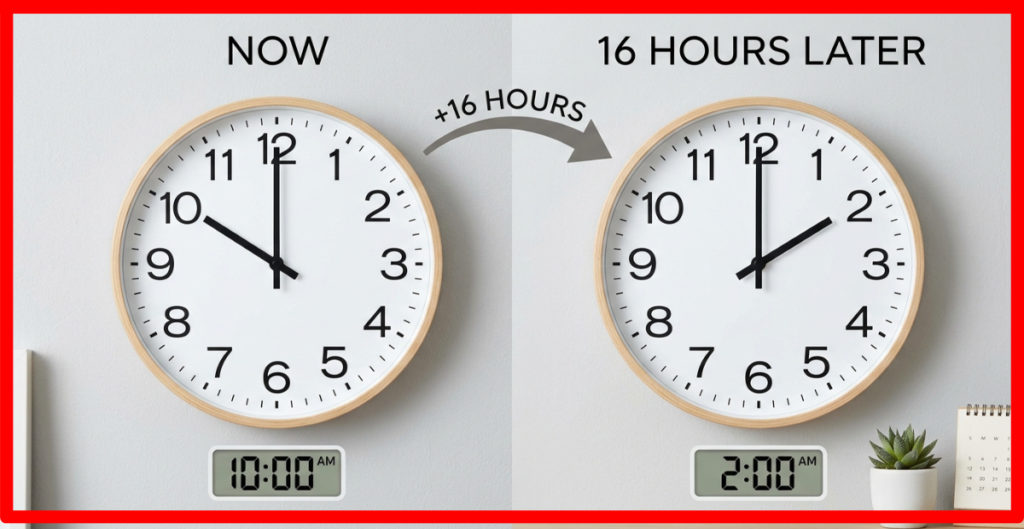
The answer depends entirely on your Current time.
There isn’t a single universal answer because every second that passes changes the result. If your current clock reads 9:45 PM, then adding Sixteen hours brings you to 1:45 PM on the Following day, which would be Sunday, July 12, 2026 if you’re starting on Saturday evening in GMT-7.
Here’s a simple example:
| Current Time | Add 16 Hours | Future Time |
|---|---|---|
| 9:45 PM | +16 hours | 1:45 PM, Sunday, July 12, 2026 |
That tiny calculation crosses midnight, which means the Date and time both change. Funny enough, people often forget the date even though it’s just as important as the hour.
This is exactly what a Future time calculation does it moves the clock forward by a defined Time interval.
Understanding How Time Calculation Really Works
Many people think adding hours is difficult. It actually isn’t, though your brain sometimes makes it look harder than it should be.
A Time calculation simply adds a number of hours to your present clock reading.
Imagine your watch says 8:00 AM.
Adding sixteen hours means:
- 8:00 AM 12:00 Noon (4 hours)
- Noon 8:00 PM (8 more hours)
- 8:00 PM 12:00 AM (4 more hours)
You’ve now added all sixteen hours.
Notice how the date changes once midnight passes. That’s where many manual calculations become a little messy, especailly if you’re tired or working late.
This type of Hour-based calculation is also called Clock arithmetic, because you’re performing arithmetic using clock values instead of ordinary numbers.
Why People Search What Time Is 16 Hours From Now
It’s surprisingly common.
People rarely search this question just because they’re curious. Usually there is something waiting on the other side of those sixteen hours.
Some everyday situations include:
- Planning work shifts
- Scheduling international meetings
- Calculating medication reminders
- Tracking delivery estimates
- Preparing travel itineraries
- Managing project deadlines
- Planning overnight road trips
- Setting alarms
- Coordinating with family overseas
Every one of these relies on accurate Relative time rather than fixed calendar dates.
In a funny way, tomorrow starts getting organized before it even exists.
Manual Time Calculation Step by Step

Learning Manual time calculation can save you when your phone battery decides today is the perfect day to retire.
Here’s an easy process.
Start with the Current Time
Look at your Digital clock or watch.
Suppose it’s:
9:45 PM
Add Sixteen Hours
Adding sixteen gives:
- 2 hours reaches midnight
- 14 hours remain
- 14 hours after midnight equals 1:45 PM
Your result:
1:45 PM Sunday, July 12, 2026
That is a complete Time conversion because both the clock and calendar changed.
Using a Time From Now Calculator
Sometimes manual math isn’t worth the effort.
A Time from now calculator automatically performs the calculation in seconds.
These calculators usually consider:
- Local clock
- Date rollover
- Leap years
- Daylight adjustments
- Regional Time notation
- 12-hour and 24-hour formats
Most Hours from now calculator tools instantly display your Future time, eliminating guesswork.
It almost feels like borrowing someone else’s brain for two seconds.
Why an Online Calculator Is Often Better
An Online calculator reduces mistakes.
Instead of mentally counting across midnight, you simply enter:
- Current time
- Number of hours
The calculator immediately performs the Time conversion formula and returns the exact answer.
That’s especially useful if you’re working unusual schedules or coordinating multiple countries.
Many websites also combine:
- Time duration calculator
- Date and time calculator
- Time interval calculator
- Time offset calculator
- Clock calculator
- Relative time calculator
These are often grouped together as Similar time calculators.
Understanding Time Duration
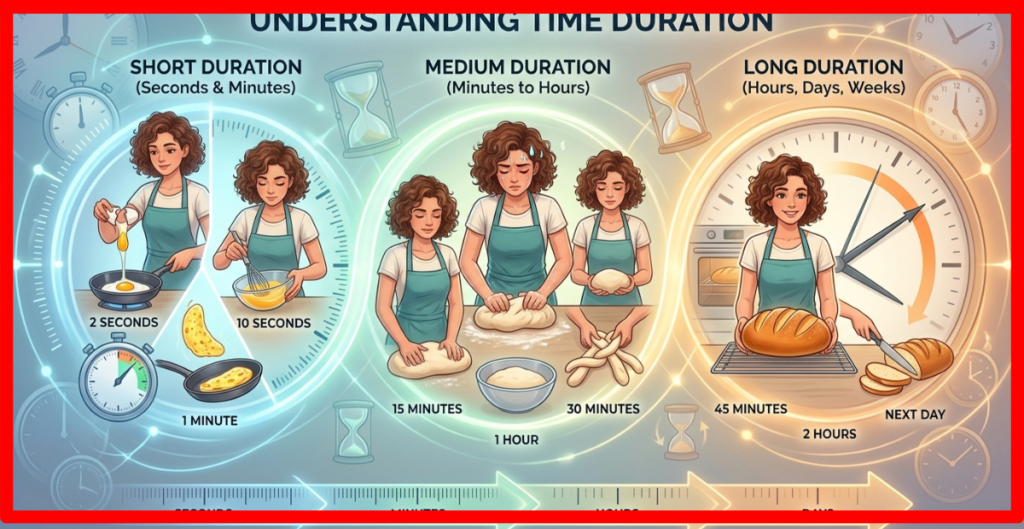
Many people think sixteen hours is just…well…sixteen hours.
But every duration can be expressed in several ways.
| Measurement | Value |
| Hours | Sixteen hours |
| Minutes | 960 minutes |
| Seconds | 57,600 seconds |
| Milliseconds | 57,600,000 milliseconds |
Understanding different Time measurement units helps programmers, engineers, scientists, and everyday users alike.
Sometimes converting time feels almost like translating languages.
Converting Hours Into Other Time Units
Let’s make it even simpler.
Convert Hours to Minutes
To convert hours to minutes, multiply by 60.
16 × 60 = 960 minutes
Convert Hours to Seconds
To convert hours to seconds, multiply by 3,600.
16 × 3,600 = 57,600 seconds
Convert Hours to Milliseconds
To convert hours to milliseconds, multiply by 3,600,000.
16 × 3,600,000 = 57,600,000 milliseconds
Those giant numbers look intimidating at first, but they’re simply different expressions of the exact same duration.
Time Zones Can Completely Change the Answer
A calculation is only accurate if the Time zone is correct.
Imagine two friends.
One lives in GMT-7.
Another lives somewhere many hours ahead.
When one person reaches Morning, the other may already be enjoying the Afternoon.
That’s why international meetings nearly always specify:
- Local time
- UTC offset
- Country
- Date
Without those details, confusion arrives right on schedule.
AM and PM Matter More Than You Think
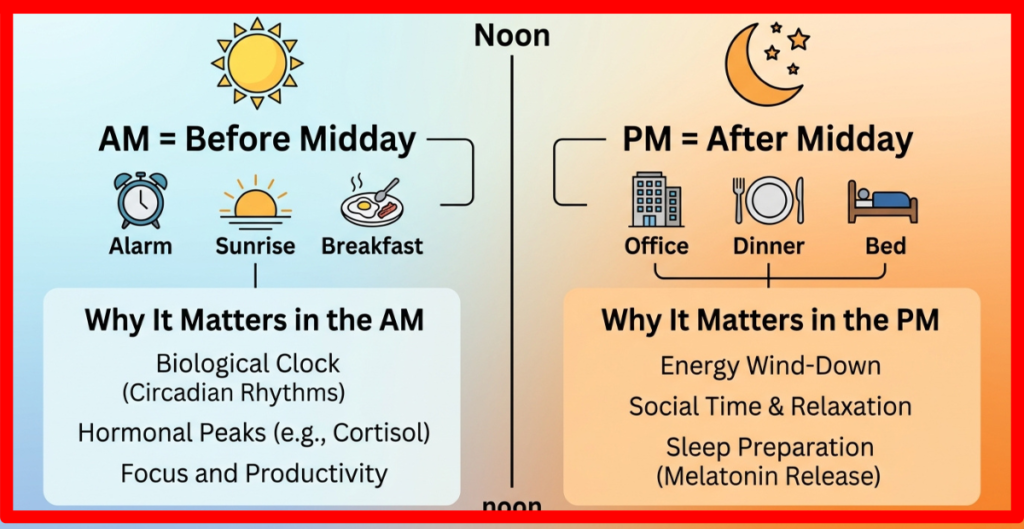
One tiny mistake between AM and PM can throw your schedule off by twelve hours.
Consider these examples.
- 1:45 PM
- 1:45 AM
The numbers look identical.
The meaning absolutely isn’t.
This is why many scheduling systems include both 12-hour clock format and military time.
Clear Time notation prevents unnecessary confusion.
Current Time Plus 16 Hours
When someone searches:
- current time plus 16 hours
- add 16 hours to current time
- time after 16 hours
- calculate future time
They’re all asking essentially the same thing.
The only changing variable is the starting point.
That’s why online tools update continuously using the Current timestamp, ensuring your answer stays accurate every single second.
What Time Will It Be in 16 Hours?
Let’s look at several examples.
| Current Time | Future Time |
| 6:00 AM | 10:00 PM |
| 8:00 AM | 12:00 AM |
| 12:00 PM | 4:00 AM |
| 3:00 PM | 7:00 AM |
| 9:45 PM | 1:45 PM next day |
These examples illustrate how Adding hours often pushes the calculation into the next calendar day.
That little jump over midnight catches people more often than they’d admit.
What Time Was It 16 Hours Ago?
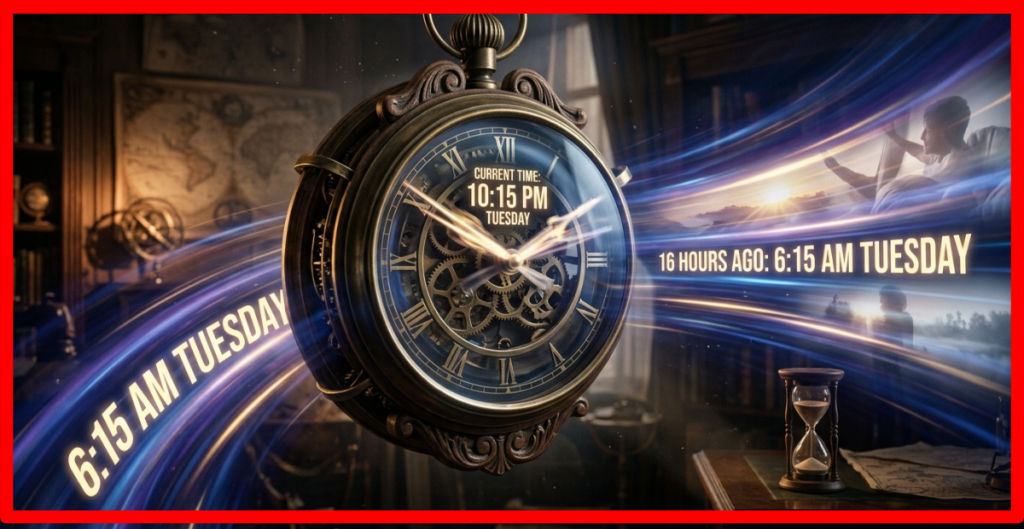
Interestingly, many people search the opposite question too.
Instead of:
what time is 16 hours from now
They ask:
what time was it 16 hours ago
The process simply works backward.Subtract sixteen hours from the present time.Many Hours ago calculator tools and 16 hours ago calculator websites perform this instantly.
Understanding both future and past calculations strengthens your overall understanding of Elapsed time and Time difference.
Common Uses for Future Time Calculations
Future calculations appear almost everywhere.
You might use them for:
- Hospital schedules
- Airline departures
- Shift rotations
- Exam preparation
- Cooking overnight recipes
- International business meetings
- Sports events
- Online gaming tournaments
- Delivery tracking
- Sleep planning
Every situation depends on accurate Future date and time calculations.Oddly enough, the more ordinary life becomes, the more invisible math quietly supports it.
Tips for Accurate Time Math
Mistakes usually happen for predictable reasons.
Keep these ideas in mind:
- Double-check AM and PM calculator results.
- Confirm the local Time zone.
- Watch for midnight crossings.
- Verify daylight saving changes when applicable.
- Use an online time calculator for important appointments.
- Remember that dates can change even if the hour seems simple.
Good Time validation takes only a few seconds but prevents much larger problems later.
Frequently Asked Questions
What time is 16 hours from now today?
It depends on your Current time. Add sixteen hours to whatever your clock currently displays.
What will the time be after 16 hours?
Use simple Clock arithmetic or an online future time calculator.
How do I calculate 16 hours from now manually?
Start with the present time, add sixteen hours, and adjust the date if midnight is crossed.
Is sixteen hours always the next day?
Not always.
If your calculation starts early enough in the morning, sixteen hours may still fall on the same date. Starting later in the day usually moves the answer into the next day.
Why use a time calculator?
A Time calculator, hours calculator, or date calculator removes manual errors and gives instant, accurate results.
Frequently Asked Question
16 hours from now
If the current time is 9:46 PM GMT-7, then 16 hours from now will be 1:46 PM on Sunday, July 12, 2026. The calculation crosses midnight and ends in the early afternoon.
What time will it be in 16 hours
Starting from 9:46 PM GMT-7, the time 16 hours later will be 1:46 PM on Sunday, July 12, 2026. You can verify this using an hours from now calculator.
16hrs from now
16hrs from now is 1:46 PM if the current time is 9:46 PM GMT-7. Remember that adding 16 hours also changes the date to the next day.
16 hours from now is what time
16 hours from now is 1:46 PM on Sunday, July 12, 2026, based on a starting time of 9:46 PM GMT-7. This equals 960 minutes into the future.
What is 16 hours from now
If the current time is 9:46 PM GMT-7, then 16 hours from now is 1:46 PM on Sunday, July 12, 2026. It represents the exact future time after adding 16 hours to the current clock.
Read this blog https://hynoval.com/4-inches/
Final Thoughts
Searching what time is 16 hours from now may begin as a simple curiosity, but it quickly becomes a lesson in how surprisingly fascinating time can be.
Whether you’re planning tomorrow’s meeting, catching a flight, setting an alarm, or simply wondering where the next sixteen hours will land, understanding Time arithmetic gives you confidence instead of guesswork.
Remember that sixteen hours equals 960 minutes, 57,600 seconds, and 57,600,000 milliseconds, yet every one of those measurements still points to the exact same journey through time.
A reliable Hours from now calculator or careful manual calculation can help you arrive at the correct answer, even when midnight quietly sneaks into the equation.
If this guide helped you understand what time will it be in 16 hours, share it with someone who loves solving little everyday puzzles, and feel free to leave a comment describing the most unusual reason you’ve ever needed to calculate future time.
Sometimes the stories behind the clock are even more interesting than the clock itself.